

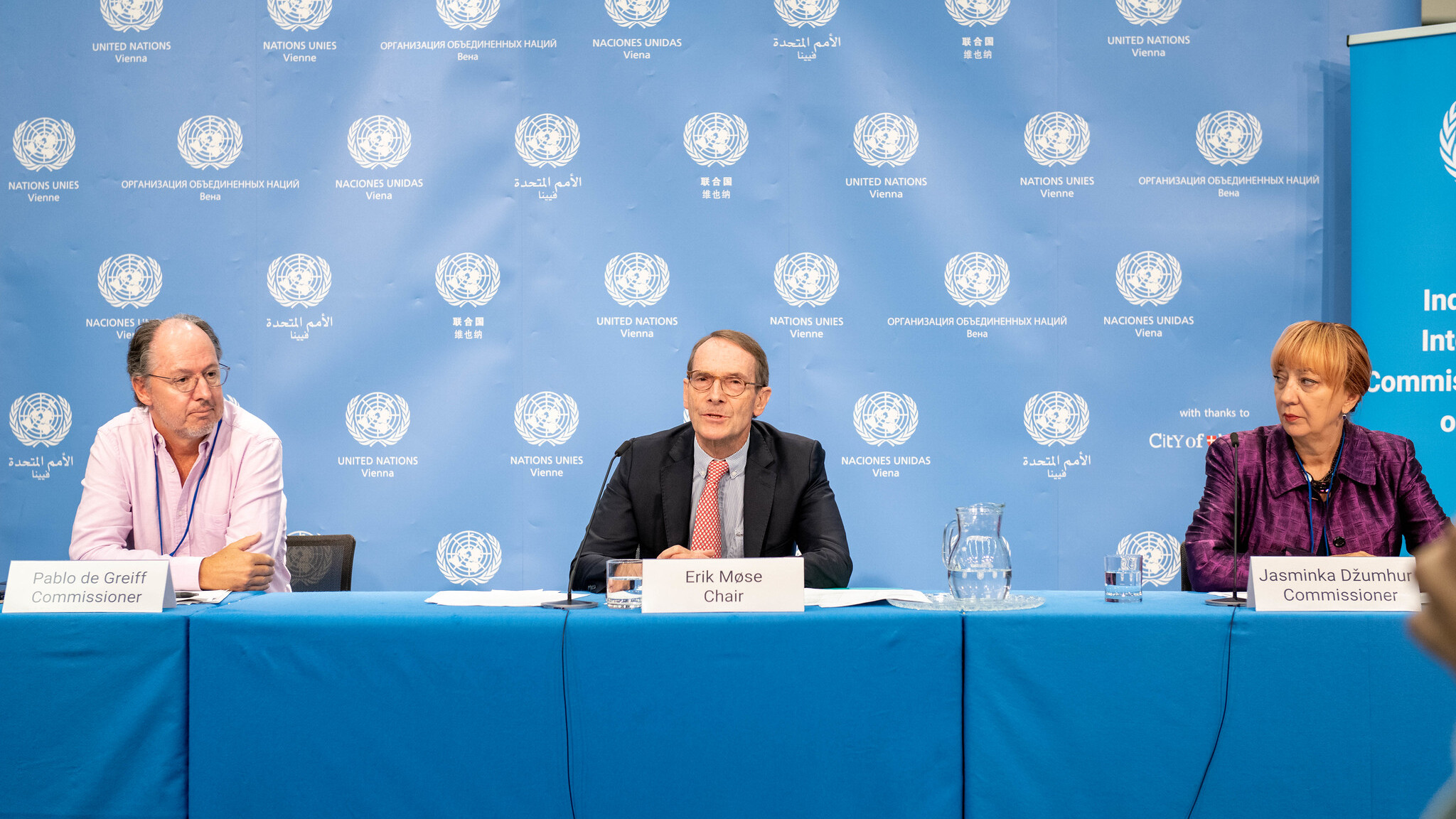
Starling’s Call to Action for the UN Commission of Inquiry on Ukraine
The United Nations Human Rights Council creates unique opportunities for citizens and experts to speak out and share their evidence with the world. In 2022, they formed the United Nations Independent International Commission of Inquiry on Ukraine (or “Ukraine COI”) to investigate aggression by Russia.
In 2023, the Commission put out a call for submissions, specifically seeking information about Russian mistreatment of children and attacks on civilian infrastructure in Ukraine. Starling Lab, Hala Systems, Global Justice Advisors, and NORSAR responded with a comprehensive submission. Not merely a report, it is also a vital call to action – shedding light on the severe human rights violations committed by the Russian Federation and affiliated paramilitary groups against Ukrainian citizens.
Highlights from the Submission:
Our document is a fusion of advanced technological analysis and exhaustive research. Key findings include details of multiple alleged crimes:
- Critical Situation of Displaced Ukrainian Children: The submission draws on a Conflict Observatory report on the removal of Ukrainian children from temporarily-occupied territories of Ukraine. We combined the report with original investigations by Hala to identify 91 sites that potentially housed or otherwise facilitated the deportation of these children. While the resulting evidence base is being kept confidential for safety reasons, the documentation by the team falls under the broad category of open-source intelligence (OSINT) and related novel approaches.
- Targeted Attacks on Civilian Infrastructure: The submission also includes an original dataset assembled by nuclear test treaty (CTBT) monitors at NORSAR, a Norwegian research foundation acting on behalf of the government of Norway in this mission. Their team published an innovative methodology using ground seismic data as well as infrasound signals to derive a geo-, yield- and time-series datasets of explosions in Ukraine – a uniquely detailed picture of the ground invasion and related bombardment campaign.
- Legal Implications and Potential Violations: Based on the above, the submission thoroughly examines possible infringements under international laws like the Rome Statute, Geneva Conventions, and the UN Convention on the Rights of the Child, suggesting potential crimes against humanity and war crimes.
Emphasis on Strategic Recommendations
Another significant aspect of this submission lies in our recommendations to the Commission and the HRC more broadly:
- In-depth Investigations into Child Transfers and Civilian Attacks: The submission advocates for comprehensive investigations into the forced transfer of children and the attacks on civilian infrastructure, utilizing datasets such as GPS mobility data, as well as seismic and acoustic wave monitoring.
- Adoption of Advanced Cryptographic Methods: We propose the implementation of cutting-edge cryptographic methods to verify the integrity and authenticity of digital evidence, crucial in the current digital landscape to ensure data integrity and overcome potential denialism.
- Creation of an Inclusive Evidence Repository: The recommendation to develop a broad repository of evidence, inclusive of civil society actors, is a step towards ensuring that the evidence base is both comprehensive and diverse. We believe the UN is uniquely positioned to federate around this effort.
- Encouraging Interdisciplinary Collaboration and Training: Finally, the submission calls for the collaboration of legal experts, digital forensics specialists, and OSINT analysts – highlighting the need for a multifaceted approach to handling digital evidence.
What’s Next?
The Commission is now considering the submissions received, and will report their findings to the Human Rights Council (HRC) ahead of the Council’s next session running February to April 2024. This report will be tabled under reference A/HRC/55/66. [Editor’s note: An initial version of their report is published here, with a comprehensive report to the Human Rights Council expected at its 58th session in March 2025.]
A joint submission from Starling and Hala was previously recognised by the Council’s 53rd session.