

Starling-Hala joint legal methodology recognised by UN Human Rights Council
A new report, presented to the United Nations Human Rights Council, cites work of the Starling Lab for Data Integrity and Hala Systems as an emerging good practice to protect the universal right to education.
The two organizations had previously submitted documentation of attacks against schools in both Ukraine and Syria (a conflict also involving Russia), along with recommendations for the long-term preservation and authentication of that evidence. They implemented a series of advanced technologies – including cryptography, decentralized systems, and blockchains – as part of an ongoing effort to help the international legal community defend the right to education.

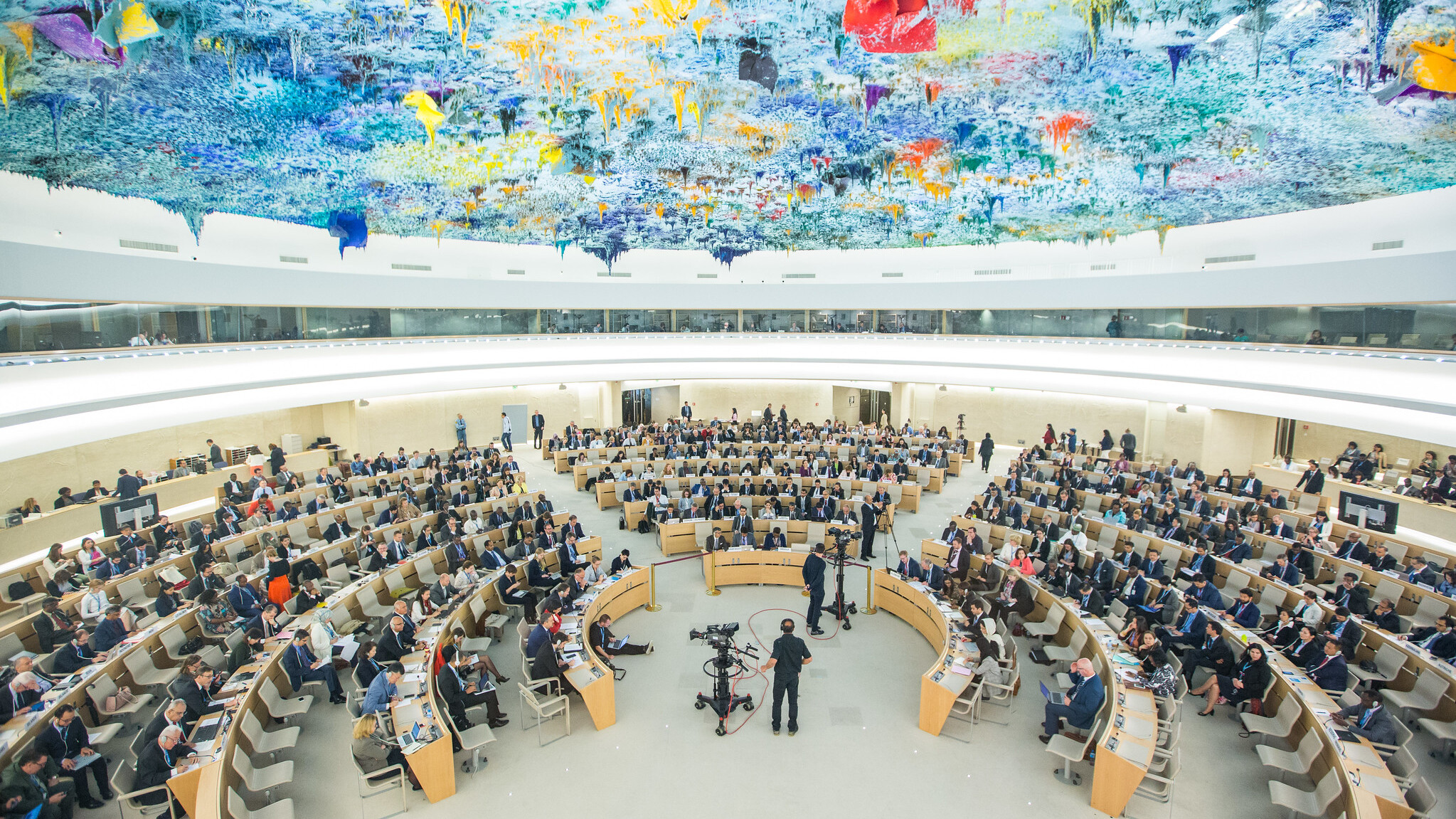
Ms. Farida Shaheed, the UN Special Rapporteur on the right to education, presented her review of the UN’s mission to protect the right to education during the 53rd session of the Human Rights Council, which concluded July 14, 2023. In her report, global leaders reflect on achievements that ensure children can learn — as well as ongoing crises that continue to deprive millions of that opportunity.
Some of the most chilling examples stem from conflicts where armed forces have bombarded the most inappropriate of targets. “In 2020 and 2021, over 5,000 reported attacks and instances of military use of educational facilities were documented in 84 countries, with systematic patterns of such use in 28 countries,” according to Shaheed’s review.
Starling Lab and Hala Systems’ earlier submission to the Special Rapporteur:
- Demonstrates how digital evidence — including social media posts and photos of the damaged schools — can be authenticated and preserved with open-source tools like Webrecorder, ProofMode and Signal. Using advanced cryptography, investigators were able to include strong proofs of critical metadata like date, time, and GPS coordinates of digital media depicting attacks.
- Illustrates how all relevant data might be preserved for the very-long term, in order to ensure that children are able to access the information and seize justice at a later date. In Ukraine, the underlying media assets and metadata were preserved using decentralized Web3 storage systems and registered on multiple blockchains, providing evidence of their continued integrity.
- Recommends investigations of such attacks by all means available and not limited to traditional criminal accountability mechanisms.
The new report, titled “Securing the right to education: advances and critical challenges,” is Shaheed’s first since being appointed last year. It addresses the need for universal acceptance of the right to education. The documentation by Starling Lab and Hala Systems indicates that some regimes are operating in defiance of these international norms. In many cases, sanctuaries of learning were turned into literal war zones with apparent deliberate attacks — despite being far from any militarily significant location.
Earlier last year, Starling Lab and Hala Systems submitted related materials to prosecutors at the International Criminal Court as evidence of potential war crimes.
Basile Simon, accountability lead at Starling Lab, said:
“We’re delighted that the Council should recognise that ensuring and protecting the right to education means empowering those deprived of this opportunity. These schools can’t be rebuilt fast enough, but when they are, the physical evidence will disappear. It can take decades to prosecute a war crime, and we want to ensure the first victims, the children, can trust the digital evidence, have an opportunity to know the truth, and be supported in their choice of the kind of justice they want.”
The techniques used for establishing trust in digital assets are taken from the Starling Framework, which focuses on three stages of data’s lifecycle: Capture, Store and Verify. This provides both experts and novices with a guide to establish and evaluate data integrity.