Distributed Storage

A decentralized infrastructure designed to ensure the long-term persistence and auditability of digital records by stripping centralized platforms of their outsized control over information.
Moving beyond fragile cloud silos, it cryptographically seals media and metadata across independent, multi-jurisdictional networks .
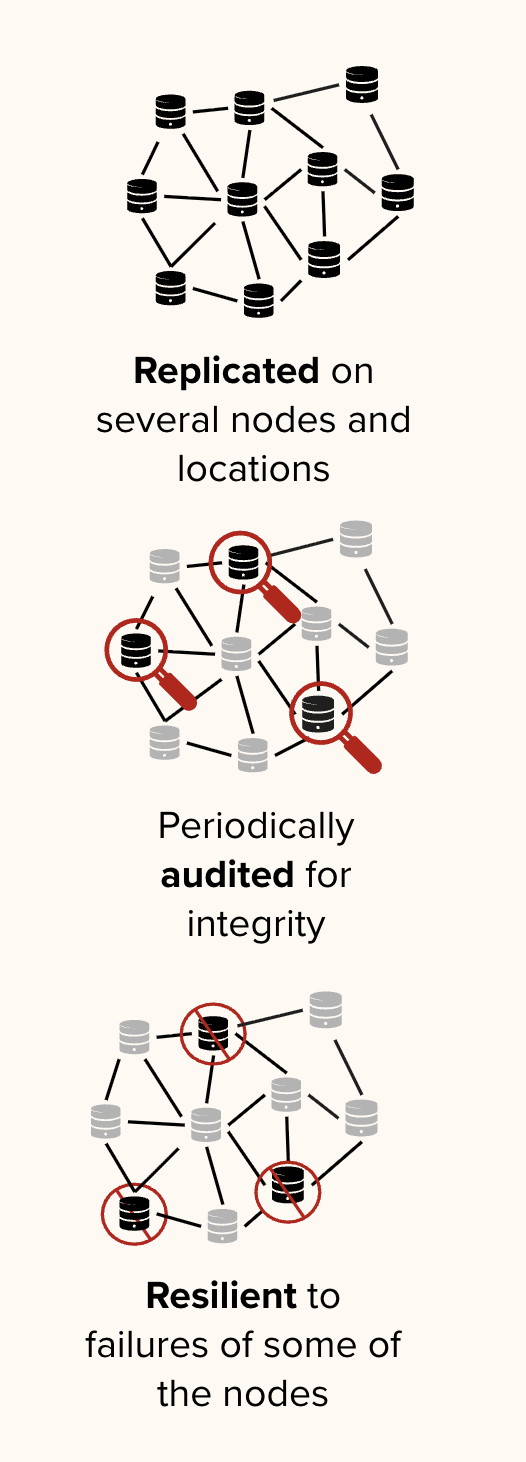
This framework shifts the preservation paradigm from blind trust in a single provider to a “proof of existence” model, where automated audits continuously verify that data remains untampered, replicated, and accessible .
YEAR
2021-25
PARTNERS
Filecoin
IPFS
Storacha
USC Libraries
The Problem
Traditional storage models rely on centralized cloud providers and social media platforms that exercise absolute authority over the availability and integrity of digital content. This creates a single point of failure: critical historical records can be silently modified, deleted due to shifting terms of service, or lost in jurisdictional disputes.
Standard databases also lack the transparency required for “chain-of-custody” documentation, making it difficult for archivists to prove that a file has not been altered since its initial preservation .
LINKS
– Case Study: Preserving 70 Years of Testimony with the USC Shoah Foundation
– Preserving Armenian Cultural Heritage on the Decentralized Web
– “Mom, I See War”, a collection of drawings from Ukrainian children, preserved on decentralised storage
The Solution
Starling Lab leads the world’s first academic center dedicated to using decentralized tools to advance human rights, backed by a multi-million dollar commitment from Protocol Labs and the Filecoin Foundation. We have moved beyond theoretical prototypes to large-scale implementations that safeguard humanity’s most sensitive digital records.
Our collaboration with the USC Shoah Foundation permanently preserves an archive of 55,000 video testimonies from genocide survivors. In tandem with the USC Digital Repository, a service of the USC Libraries, we run a 22-petabyte Filecoin node at USC – just one part of the Libraries’ deep expertise in preservation and archiving.
By housing this node within a leading research university, we combine the innovation of Web3 protocols with the rigorous preservation standards developed over decades by archivists and librarians.