

After the Rubicon: AI, Creators, and the Design of Authenticity in Documentary Media
We’ve Crossed the Rubicon
At this point, it is no longer useful to ask whether artificial intelligence will change documentary practice. That threshold has already been crossed.
AI is now embedded across the non-fiction content ecosystem: in historical documentary broadcast series, festival films, independent shorts, and throughout the contemporary creator economy spanning YouTube, Instagram, TikTok, X, and other social video platforms. What was once speculative has become common practice. The question has shifted from whether these tools belong in documentary to how they are being used, by whom, and with what kinds of disclosure and care.
This post does not attempt to settle those questions. Instead, it maps where we are right now — across established filmmakers, creators, platforms, and experimental formats — and asks what these early uses suggest about the future shape of documentary and the design of authenticity itself.
What’s Already Happening: Established Documentary Experiments
Before turning to creators and platforms, it’s important to ground this moment in serious documentary practice. Many of the most instructive experiments with AI are not happening at the fringes, but in projects led by experienced filmmakers working within real ethical constraints.
Voice as Archive
One of the earliest fault lines emerged around synthetic voice.
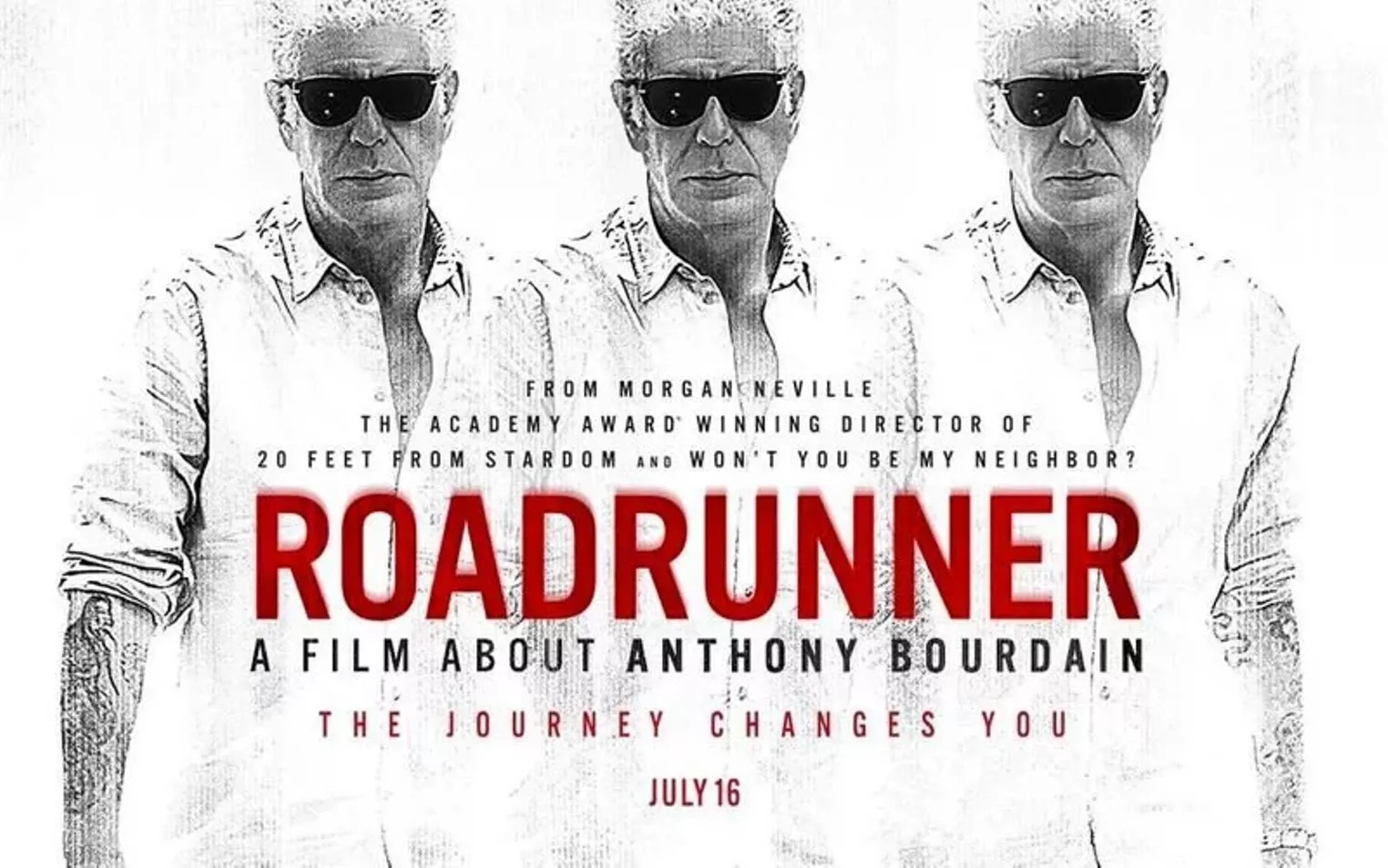
The controversy surrounding Morgan Neville’s biographical documentary about the late Anthony Bourdain, Roadrunner, centered not on the existence of AI-generated audio, but on its undisclosed use. Neville took a small number of sentences from a text exchange Bourdain had written and brought them to life with a voice clone. Once discovered, the backlash was swift — not because the words were fabricated, but because audiences felt the social contract had been surreptitiously breached. The lack of transparency left the filmmaker’s storytelling intentions exposed to concerns about posthumous consent.
That reaction stands in contrast to Andrew Rossi’s The Andy Warhol Diaries on Netflix, which also used generative voice technology, but did so transparently, in collaboration with Warhol’s estate, and with extensive public explanation. The same act — using AI to allow a person to posthumously speak words never actually recorded — produced a very different reception.
A third case, American Murder: Gabby Petito, complicates the picture further. Even with disclosure and family involvement, some viewers expressed discomfort with hearing private diary entries voiced aloud. Transparency is necessary, but it isn’t always sufficient.
Historical Re-Creations Where Archives Don’t Exist
Another rapidly expanding use case involves historical recreation.
In Free Leonard Peltier, director David France and collaborator Jesse Short Bull used AI-assisted recreations to visualize moments for which no archival footage exists, working in consultation with archival professionals and disclosing these choices clearly to audiences.
Similarly, the Sky History series Killer Kings represents one of the first broadcast television productions to use AI-generated reenactments at scale. The motivation was not novelty, but feasibility: historical series of this scope had become financially prohibitive using traditional methods.
In both cases, AI is not replacing archival evidence. It is extending what can be responsibly represented, allowing history to be visualized where silence once stood.
Identity Protection: Deepfake as Ethics
Some of the most ethically compelling uses of AI in documentary involve protecting human subjects rather than simulating events.
In Welcome to Chechnya, face-replacement technology was used to obscure the identities of LGBTQ+ refugees while preserving their emotional presence. Rather than blurring faces or hiding subjects in shadow, the film composited donated faces from activists onto participants, maintaining eye contact and expression.
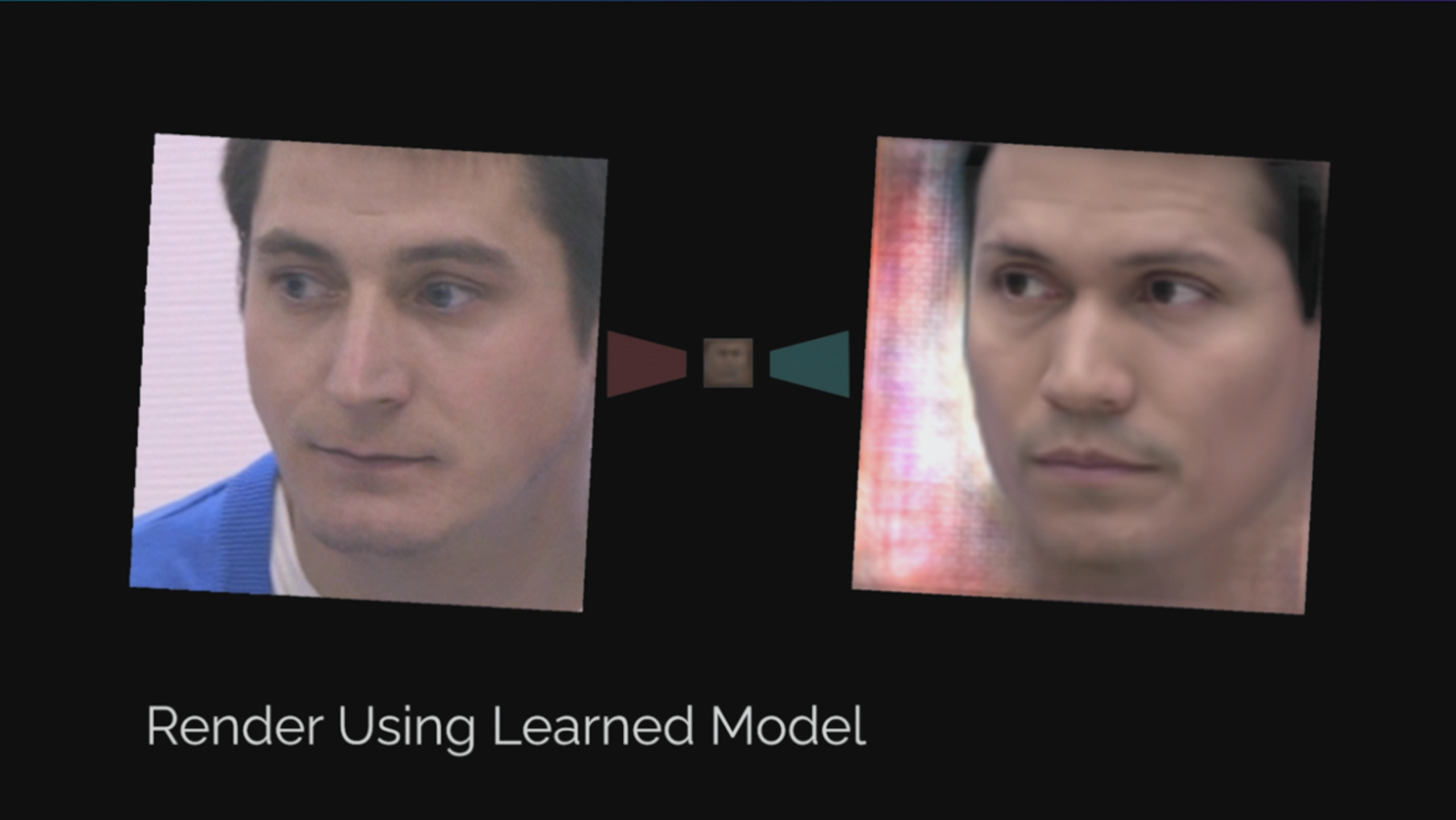
A similar strategy appears in Another Body, which profiles victims of non-consensual deepfake pornography while using synthetic techniques to protect them from further harm.
In both cases, synthetic media arguably increases truthfulness by enabling stories that could not otherwise be told without erasing the people at their center.
Generative Form: What Is a Documentary Now?
Beyond content, AI is reshaping documentary form.
In ENO, the biographical documentary about music producer Brian Eno, the filmmakers designed an experience where a different version of the film is shown at every screening. Eno and his collaborator Brendan Dawes built a bespoke hardware unit called Brain One, which uses generative technology to reinterpret hundreds of hours of archive and interviews into a new experience — for the audience and even for the director himself. There is no definitive cut. Documentary becomes a performance, a living system rather than a fixed artifact.
A complementary counterpoint appears in Railbound, a short film by creative director Alex Naghavi, built from the documentary photography of Mike Brodie. Brodie’s still images, long recognized for their raw intimacy, document people living as hobos on trains. Railbound animates these photographs into motion using AI tools, while remaining explicit about its hybridity from the opening credits onward.
Developed in close collaboration with Brodie and grounded in respect for the original archive, the project uses AI to create continuity and movement while leaving every narrative and emotional decision — pacing, tone, sound, performance, color — in human hands.
Placed side by side, ENO and Railbound suggest two futures for documentary form: one oriented toward variability and system-level authorship, the other grounded in archival care and transparent interpretation. Together, they make clear that the question is no longer whether documentaries will become hybrid, but how that hybridity is disclosed, governed, and understood.
Creators and the Contemporary Documentary Ecosystem
These developments are not confined to traditional documentary spaces.
Across the contemporary creator economy, creators are increasingly acting as documentary participants. Often working solo or in small teams, they combine research, narrative, and visuals in ways that bypass institutional commissioning altogether.
AI functions here as a force multiplier, accelerating research, lowering production costs, enabling “impossible” visuals, and expanding who gets to attempt non-fiction storytelling.
This is the optimistic side of decentralization. Stories that would never clear traditional gates now find audiences. At the same time, the risks outlined in my previous post remain, and are amplified by scale.
Platform Anxiety: Authenticity After Abundance
One of the clearest signals that something fundamental has shifted comes not from critics or academics, but from platforms themselves.
In recent public commentary, Adam Mosseri, head of Instagram, has articulated a concern that goes beyond moderation or labeling. His argument is that authenticity itself is becoming infinitely reproducible. As AI-generated media grows indistinguishable from captured reality, the qualities that once made creators matter — being real, being present, being unfakeable — are no longer scarce by default.
What makes Mosseri’s perspective especially relevant is that he doesn’t frame this as a problem solvable through disclosure alone. Labels may help, he suggests, but they will inevitably fail as synthetic media improves. Instead, he gestures toward a deeper requirement: systems that can fingerprint real media at capture, establishing a chain of custody that allows platforms and audiences to distinguish documented reality from simulation.
In other words, Mosseri is pointing toward provenance, not just transparency. This aligns closely with the direction of research efforts like Starling Lab, which focus on authenticating origin rather than chasing increasingly sophisticated fabrications after the fact.
Mosseri also anticipates the human consequence of this transition. As synthetic content floods feeds, audiences will shift from default belief to default skepticism, paying more attention to who is sharing something and why. Surface-level disclosure won’t be enough. What’s required is context that can scale — signals about capture, authorship, and continuity that don’t rely on trust in any single institution.
When platform leaders begin publicly advocating for cryptographic provenance and capture-level verification, it signals that the challenge has moved from cultural concern to infrastructural necessity.
Acceleration in the Wild: Venezuela and Creative Proximity
If the earlier examples illustrate careful, intention-driven experimentation, recent events around Venezuela show how quickly creative practice can collide with live reality.
Following reports of political upheaval involving Nicolás Maduro, social platforms were inundated with misleading visuals: AI-generated images, recycled footage, and out-of-context photographs presented as breaking news. This dynamic was documented in reporting that showed how outdated visuals and synthetic imagery fueled widespread confusion during the unfolding events.
What made this moment especially revealing was not only the volume of misinformation, but the breadth of participation. The influx of synthetic imagery did not come exclusively from coordinated disinformation campaigns. Much of it emerged organically from within the AI creator community itself.
Well-known AI artists — many of whom focus on education, tutorials, and speculative storytelling — used the same tools they employ for short films and creative experiments to respond to the unfolding events. These works were not framed as documentary claims or journalistic interventions. They were acts of expression, produced in real time, using tools designed for cinematic realism.
One such example involved a popular AI creator demonstrating how Nano Banana Pro could generate a hyper-realistic, multi-panel “photo-documentary” imagining a fictional operation surrounding Maduro’s removal from power. The exercise was presented as a technical and creative demonstration, not reportage. Yet the imagery adopted the full visual grammar of breaking news.
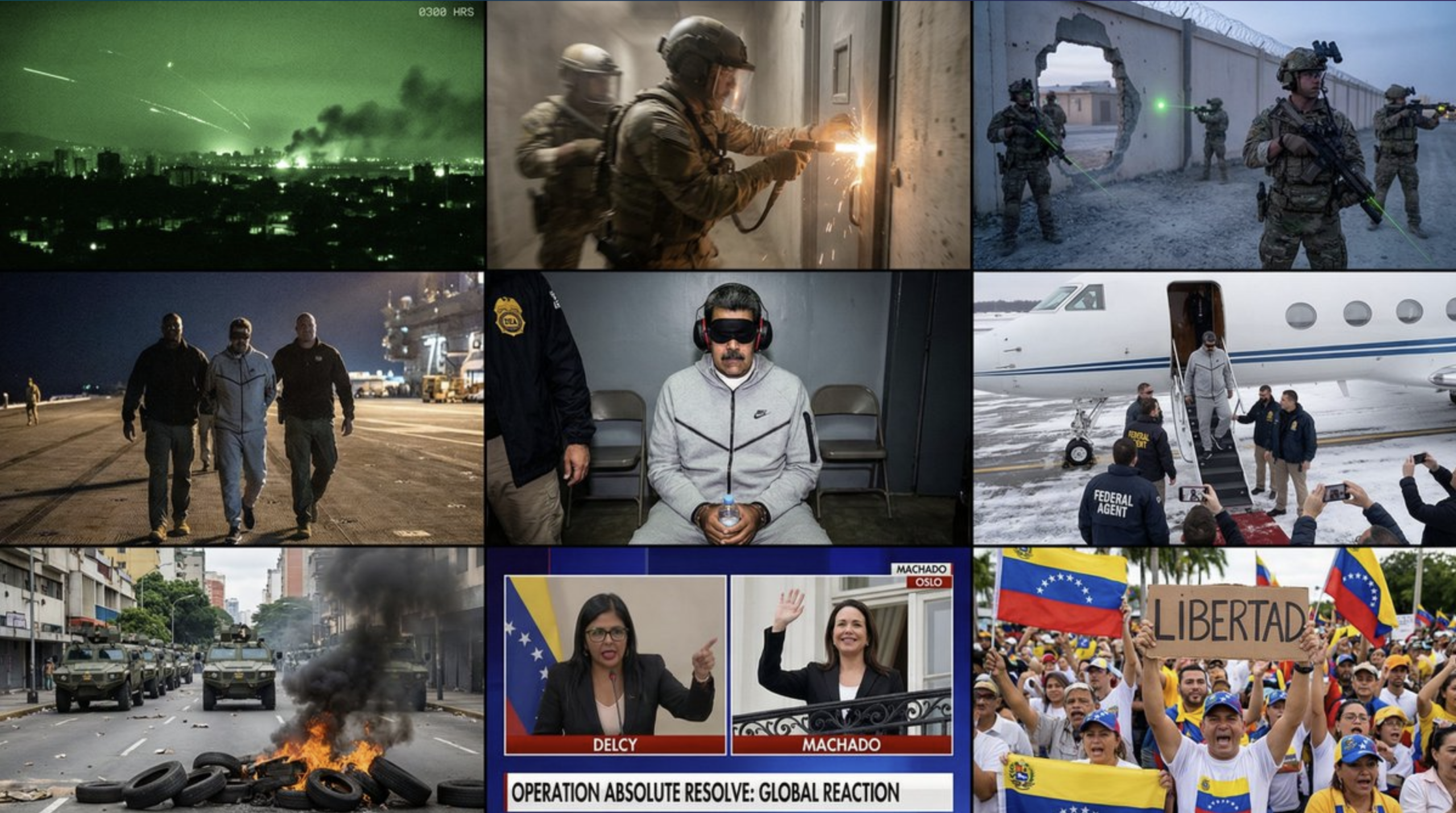
None of this content was intended to mislead. But it underscores a real shift: creative tooling now sits so close to reality that expressive experimentation and perceived documentation can collapse into the same visual space, especially during moments of crisis.
Designing Authenticity Into the Experience
This collision brings us to the design challenge ahead.
If documentary forms are fragmenting — from feature films to feeds, clips, and explorable virtual environments — then authenticity can no longer remain implicit. It cannot live only in credits, press materials, or after-the-fact explanations.
The shift must be from “trust me” to “here’s how this was made.”
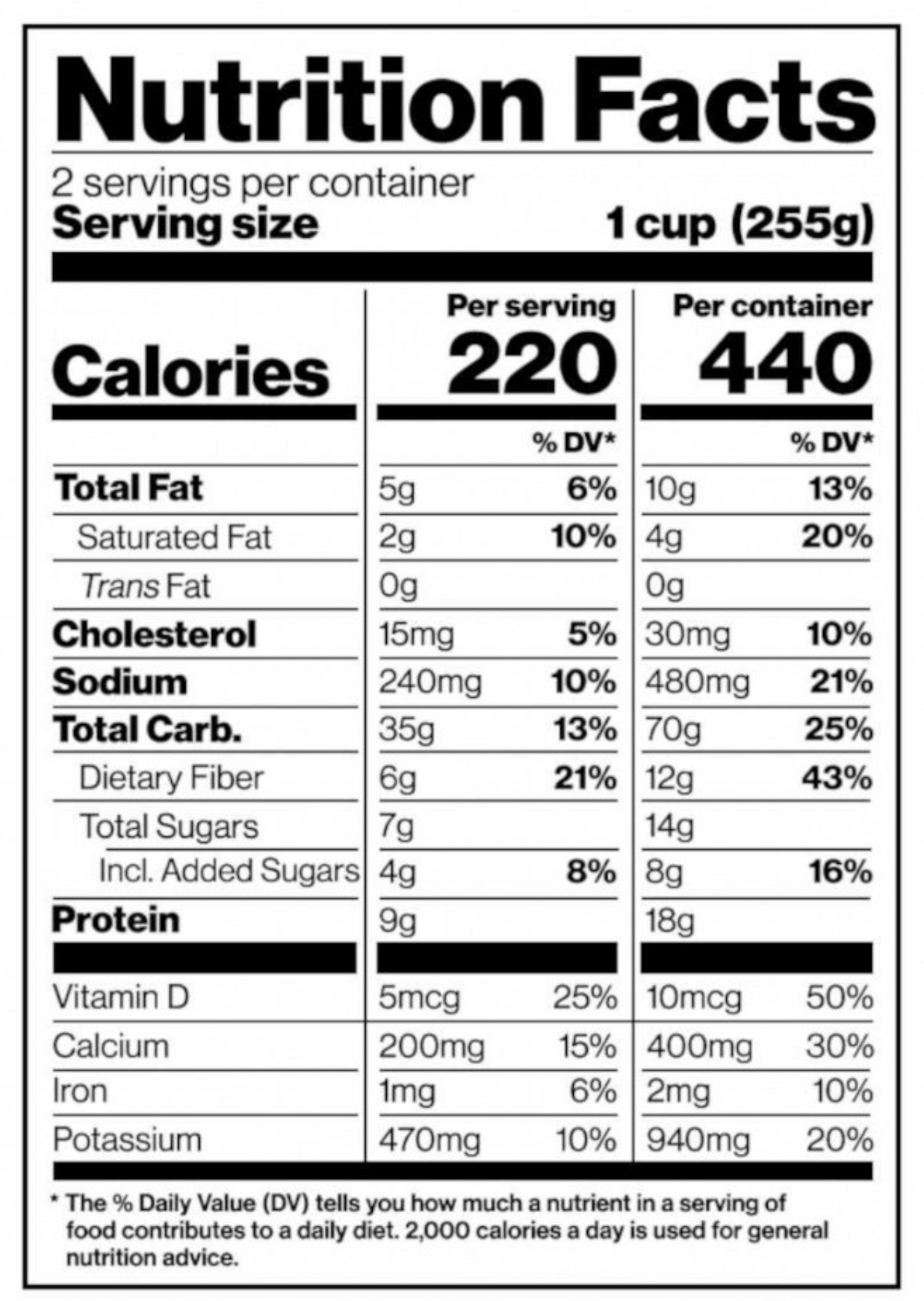
Consider the nutrition label, and what a phenomenon it’s been for the way people interact with what they consume and their health. It’s no coincidence that we talk about a media diet — media is something we consume too, and the relationship between maker and audience carries a similar obligation. What the nutrition label did for food — creating a shared, legible contract between manufacturer and consumer — is exactly the kind of user experience worth designing toward here.
Standards like C2PA are doing the foundational work, establishing the ingredients list: a verifiable record of what a piece of media is made of and how it got there. That’s the necessary starting point. But the infrastructure only matters if it reaches people in a form they can actually use.
The nutrition label works because it operates at two levels at once. Most people glance and move on — the presence of the label is itself a signal of accountability. The person who wants the full breakdown can find it. One standard, two levels of engagement, billions of transactions, all of it embedded in the act of buying food rather than added on top of it.
That layered dynamic is exactly what’s missing from how we currently present media provenance. We’ve been designing for the researcher, not the viewer. Movie ratings and game ratings point toward the right instinct: trust signals need to be ambient and low-friction before they can be meaningful. The original blue checkmark worked the same way — a simple icon implying a verified relationship between an identity and an institution.
Imagine extending that logic to YouTube, where most non-fiction content is now consumed. A small, color-coded icon — visible at a glance — tells you immediately where a piece of content sits on the spectrum from fully documented reality to openly synthetic work. A click, or even a QR scan, takes you deeper: into the metadata, the sourcing, the full ingredients list for anyone who wants it. Something that intuitive, baked into the YouTube experience, could just as easily travel to streaming platforms, broadcast, and social video. The standard expectation becomes: before you consume, you already know what you’re getting into, and you know where to go if you want to know more.
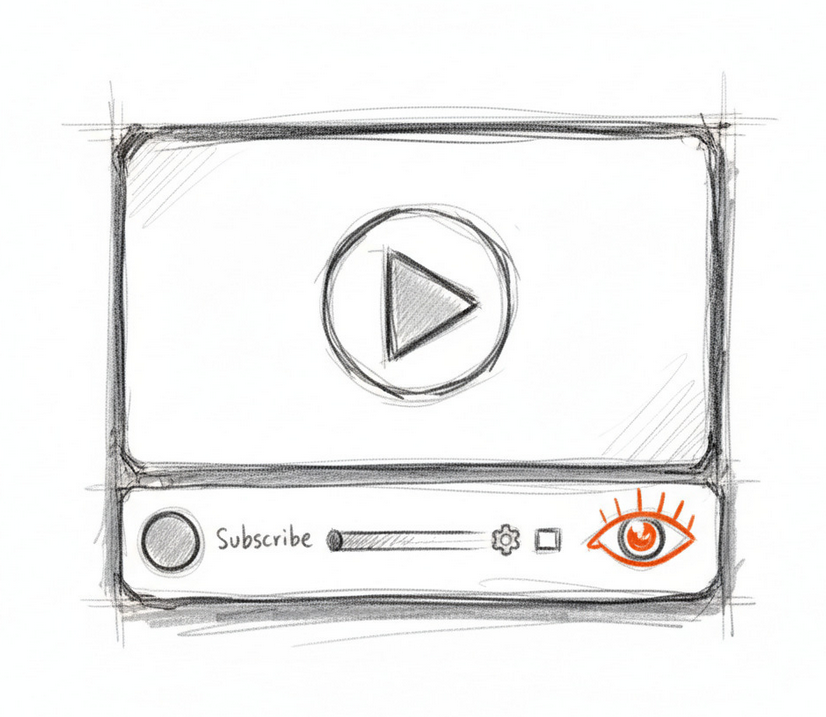
(UX Design suggestion: adding a simple icon inside the existing interface, color-coded to correspond to simple criteria akin to Movie or Game ratings, on a spectrum reflecting fact, fiction, and the space in between measured on a transparent system. Clicking the icon reveals verified metadata, + keyword tags for a range of formats including “verite”, “op-ed”, “investigative”)
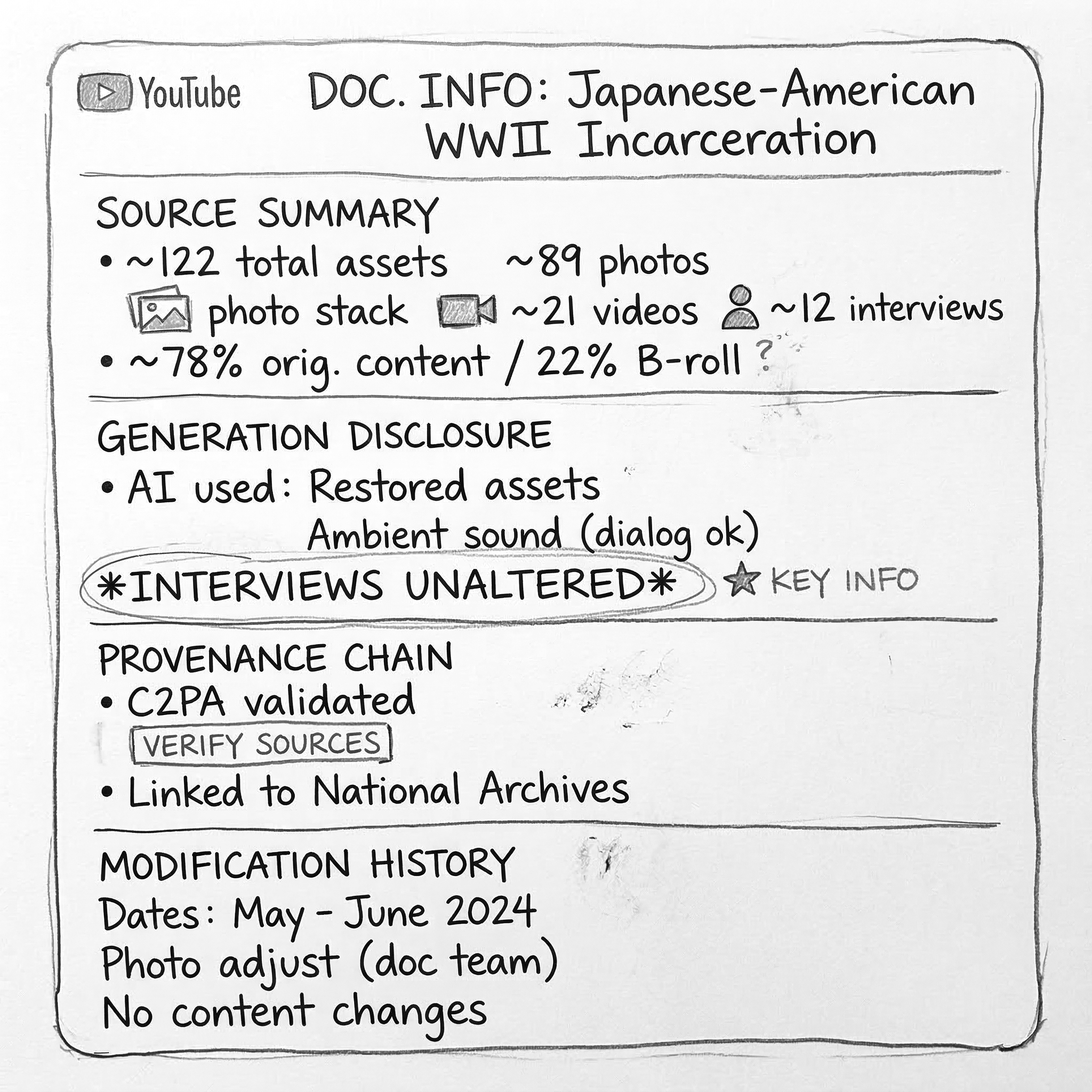
(UX Design suggestion: After clicking eye icon, detailed information display including sources used to make the documentary, disclosure on AI usage, provenance info such as C2PA, and modification history info.)
That also means making meaningful distinctions that currently get flattened. An op-ed is not investigative journalism. A produced reality show is not a verified documentary. These don’t need to be condemned for what they are — but they shouldn’t share the same unlabeled space either. The label doesn’t judge the content. It just tells you what’s in it.
The technical foundation exists. What’s been missing is the will to treat media provenance as a consumer experience — something designed into the transaction, not bolted on afterward.
Experimentation Is the Point
There are no final answers. Documentary has always evolved through practice — through artists testing boundaries, audiences reacting, and norms slowly forming. AI accelerates this process, making both the risks and the possibilities more visible.
What matters now is not certainty, but intention. Transparency. Infrastructure that supports interpretation rather than replacing it.
Documentary remains one of the few spaces where society can rehearse how to live with ambiguity. In that sense, it is not being displaced by AI — it is being asked to lead.