

Setting the Record Straight in Brazil’s Burning Wetlands
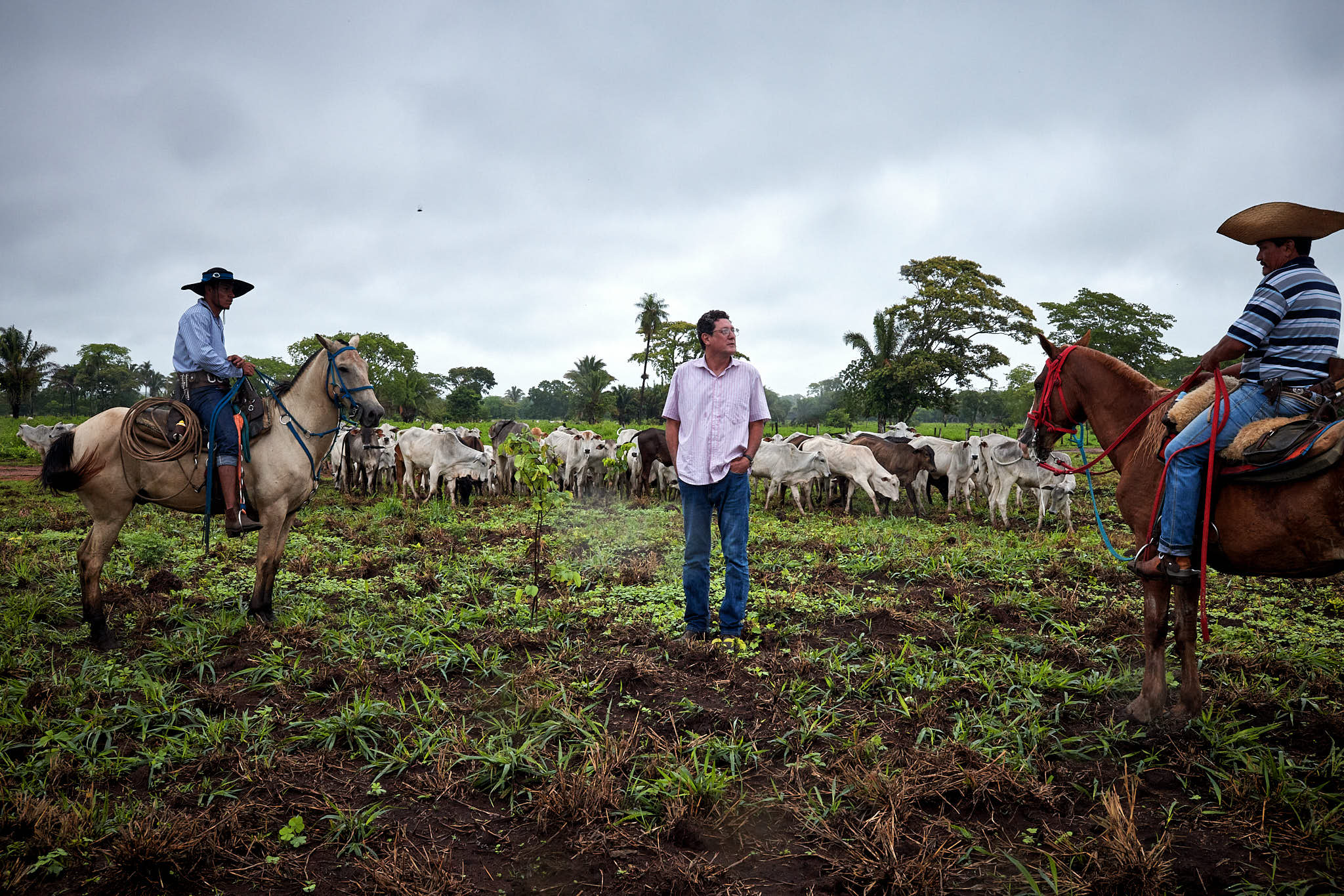
Setting the Record Straight in Brazil’s Burning Wetlands
Documenting the devastation of Brazil’s Pantanal wetlands, this story showcases a collaboration between a writer, a photojournalist, and technologists fighting rampant disinformation during Brazil’s presidential election.
Reading Time: 5min


Contents

Background
Under President Jair Bolsonaro, climate-driven droughts and burns to clear land spawned more wildfires than ever throughout Brazil, especially in a central wetland region called the Pantanal. More than a quarter of the Pantanal (over 9.6 million acres) burned in 2020 alone, devastating subsistence farmers, small ranchers, and fishers. For years, Bolsonaro downplayed the crisis as “disinformation,” even in speeches to the United Nations General Assembly.
The October 2022 Brazilian presidential election captured the world’s attention with concerns about misinformation as Bolsonaro sought a second term. The incumbent had continued to spread his own disinformation about the cause and effects that threatened his country’s rare habitats.
Finding a way to prove to the public what was really happening in this vulnerable ecosystem was a high priority for local journalists. On September 30, 2022, Inside Climate News (ICN) published a story headlined “In Brazil, the World’s Largest Tropical Wetland Has Been Overwhelmed With Unprecedented Fires and Clouds of Propaganda.” In addition to the environmental challenges the country had been facing at the time, the story highlighted how Brazil has also been confronting two destructive forces challenging journalism: the contradiction of fact-based information and the denial of climate change.
Bolsonaro lost his bid for reelection the following month to his predecessor, Luiz Inácio Lula da Silva. While Bolsonaro was president, the Amazon had seen the highest deforestation rates in 15 years. In contrast, when “Lula” Da Silva was in office from 2003 to 2010, the same region saw a 48% decrease in deforestation rates. The 2022 presidential election was celebrated by those hoping to protect sensitive environmental habitats and seen as a victory over denialism.
Whether about climate change or any other high-stakes issue, it is of utmost importance that electorates (and all audiences) can access reliable evidence and make their own informed decisions. We set out to demonstrate how verifiable digital media can serve that function when it includes a provenance trail and cryptographic integrity.
Contents
Context
In this project, we deployed new technologies to confront visual disinformation to help combat the denialism of the climate realities that were affecting Brazilians across the Pantanal.
Independent photojournalist Pablo Albarenga is a documentary photographer and visual storyteller who has documented land conflicts in Latin America involving indigenous people. He is a National Geographic Explorer, a grantee of the Pulitzer Center, and was selected in 2020 as the photographer of the year by the Sony World Photography Awards. In the spring of 2022, Albarenga traveled to Brazil’s largest tropical wetland area, the Pantanal, to document the environmental devastation of the area for a project published with Inside Climate News. The story was written by Jill Langlois, an independent journalist based in São Paulo, Brazil. Her work, which focuses on human rights, has appeared in National Geographic, The New York Times and The Guardian.
Founded in 2007, Inside Climate News is a Pulitzer Prize-winning, nonprofit, nonpartisan news organization that reports on and provides analysis of climate change, energy and the environment. Senior Editor and award-winning photojournalist Michael Kordas oversaw the editorial process, editing Langlois’s story and Albarenga’s photographs. Columnist and Web Producer Katelyn Weisbrod handled production, technical implementation and story layout.
At the Starling Lab for Data Integrity, an interdisciplinary team of journalists/editors and technologists worked on novel ways to bolster trust in this project’s key records. Albarenga worked with the lab’s engineering team, including Chief Technology Officer Benedict Lau and Head of Engineering Yurko Jaremko, to deploy authenticated camera capture tools to better secure metadata at source. This group oversaw development and implementation of photo capture and authentication solutions. They also worked with Four Corners developer Corey Tegeler who assisted with the final photo presentation.The Lab’s editorial team, led by Journalism Program Director Ann Grimes and former Executive Editor Sophia Jones, also worked with Albarenga, Langlois, and the Inside Climate News editorial and tech teams to implement and integrate new technologies into the news organization’s workflow.
Contents
Framework
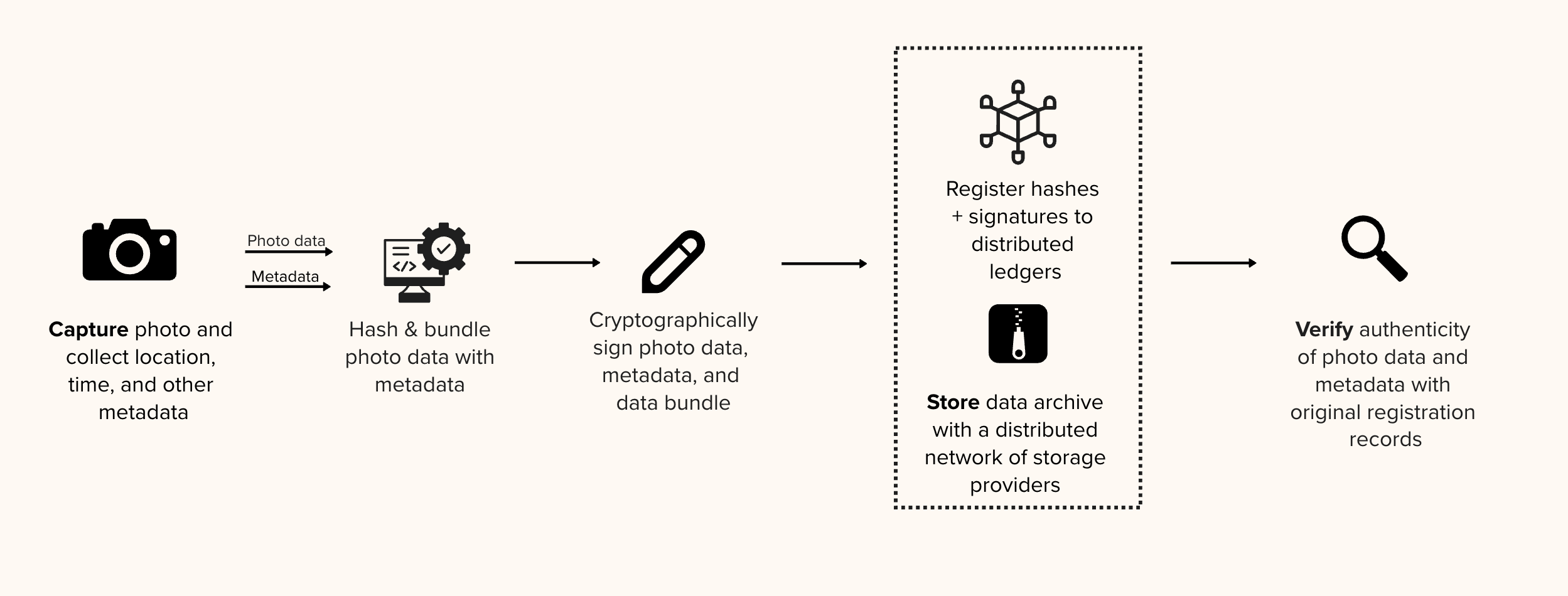
At the Starling Lab, our guiding objectives include establishing provenance of information and securing the integrity of digital content preserved for long periods. Integrity of digital content is assured through cryptography, allowing current and future verifiers to evaluate the authenticity and trustworthiness of each asset. To accomplish these objectives in this project, the Lab applied our three-step framework of Capture, Store, Verify.
The Challenge
Senior Editor Michael Kordas noted how climate change deniers may dispute the subject matter ICN covers and recognized the value of rigorous verification standards. “With photojournalism as part of my portfolio of responsibilities at ICN, I was excited to use the image verification technologies provided by Starling and the Four Corners template,” he said.
Kordas pointed to ICN’s commitment to maintaining the highest standards of vetting and verification for their stories. “ICN stories have occasionally been called into question or subjected to attempts to discredit them by climate change skeptics or those who have vested interest in preventing action on climate change,” he explained. The integration of authenticity markers for an image is a crucial addition to their verification process in visual storytelling. “During the past few years, ICN has been expanding its photographic report, and being able to provide proof of an investigative photograph’s provenance and authenticity … can help bolster the credibility of the photography the site publishes and increase its impact,” Kordas added.
So how might authenticated images disprove the rhetoric of Bolsonaro?
Contents
The Prototype
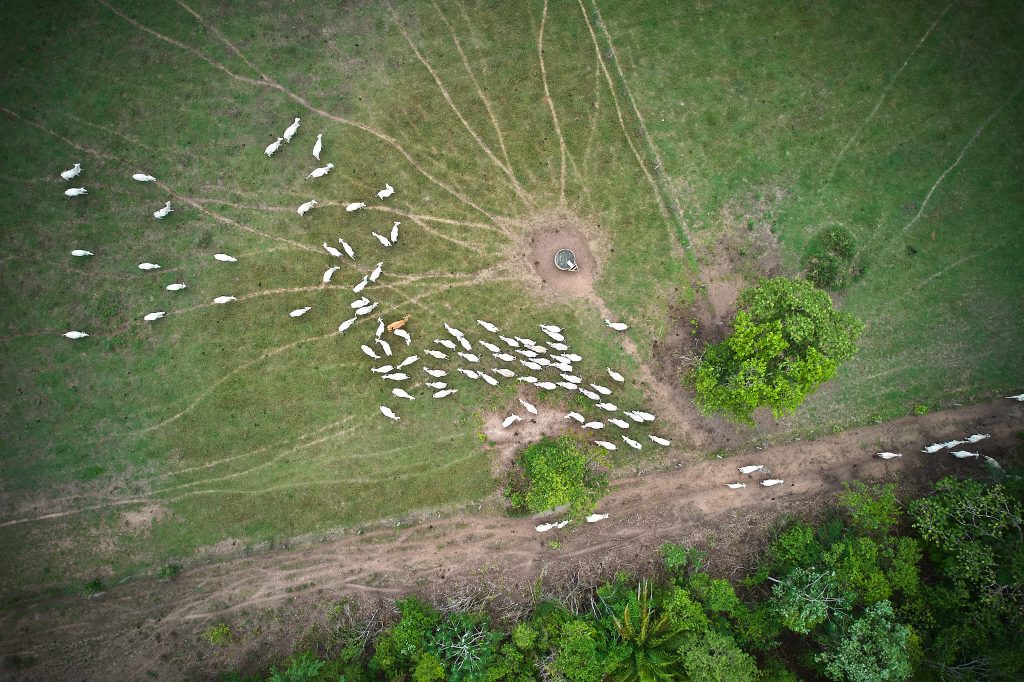
In this project, we sought to deploy new technologies to confront visual disinformation by better authenticating digital content. Photos presented in our coverage provide a clear window into the environmental crisis. They go further by displaying contextual metadata that supports the provenance of what is documented, creating an unalterable “time capsule” of the events captured in the images, displayed using a UX called Four Corners and verification standards established by the Coalition for Content Provenance and Authenticity (C2PA).
Capture: Starling strives to establish a root of trust in digital media as close to the point of capture as possible. For this purpose, we co-developed a mobile application—Starling Capture, in collaboration with Numbers, a Taiwan-based company that leveraged the hardware signing capability of the HTC Exodus 1S for their media authentication products. This smartphone, paired with a professional Canon camera via Canon’s Camera Control API (CCAPI), can authenticate digital content and metadata at the point of capture. Additionally, integrity information and provenance metadata from the images were registered on the IOTA blockchain.
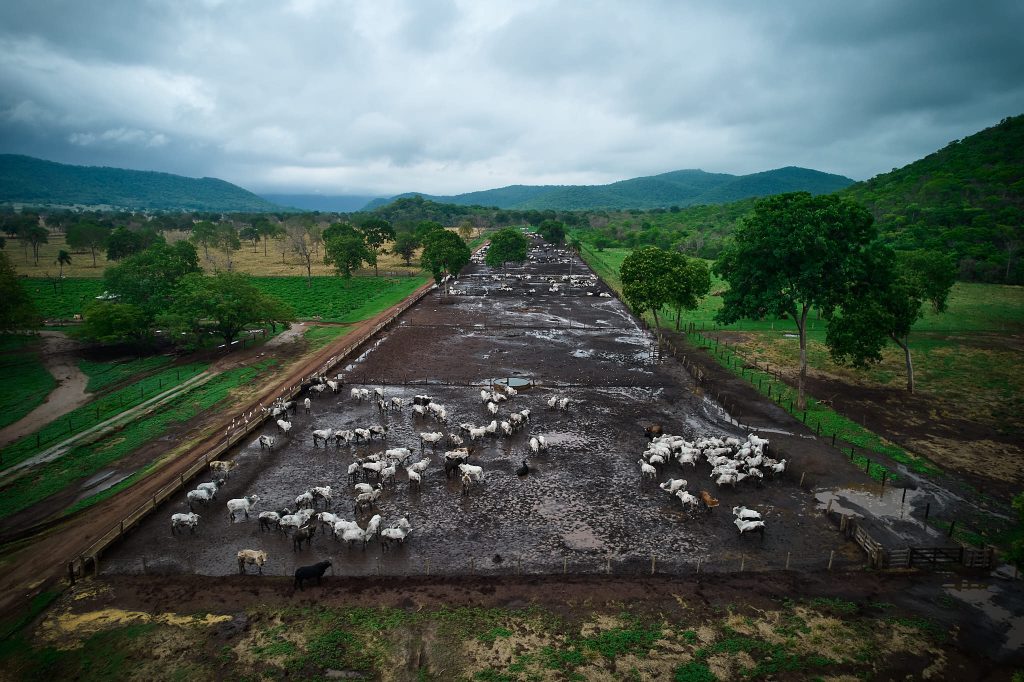
Store: Starling researches how advanced cryptography and decentralized networks can securely preserve and distribute content over time. While integrity records from the time of capture are registered on public ledgers, the images themselves were preserved on the Filecoin storage network and made available over IPFS for peer-to-peer distribution.
Verify: Starling uses immutable public ledgers to register digital content, as well as other techniques to include contextual information that are authenticated. This forms an auditable foundation that enables experts to verify the provenance and evaluate the trustworthiness of that content. With the Four Corners project, we created a unique display for contextual and authenticity information packaged in each image file using the Coalition for Content Provenance and Authenticity (C2PA) specification, and displayed the information in Inside Climate News articles using a custom WordPress plugin.
Contents
Technology
Capture
The Capture Setup
The authenticated capture process begins with provisioning of equipment capable of collecting contextual information and cryptographically securing data at the point of capture. In this project, photojournalist Pablo Albarenga used a Canon EOS R5 camera paired with an HTC Exodus 1S phone, which was preconfigured with the open-source Starling Capture mobile application and authorized to send data to the Starling servers.
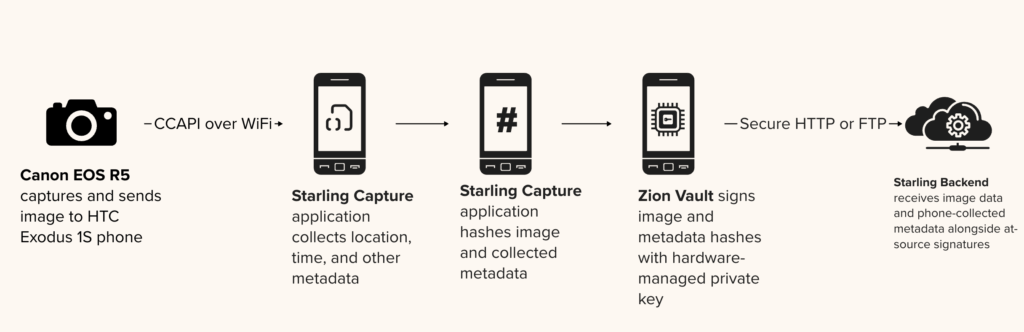
Uniquely, this smartphone embeds a secure vault for cryptographic keys inside a hardware enclave—permitting digital signing of data using a hardware-protected key. This significantly enhances security by isolating the keys from the main operating system and protecting them from tampering and unauthorized access.
This mobile application is specifically built to function with Canon cameras supporting Canon’s newly-released Camera Control API. The API permits the phone to interact with the camera over WiFi, receiving preview data and captured photos in the application. Once captured, a photograph is wirelessly transferred to the phone automatically, and the application then collects rich contextual metadata surrounding the capture such as location and time. It then computes the image’s unique digital fingerprint—its cryptographic hash. The image hash and contextual metadata are then digitally signed.
This digital signature verifiably ties together a private key provisioned on a specific device and each of the photographs originating from it. Only recently, and long after the completion of this project, have a very limited number of professional cameras become capable of digital signage directly on-camera as part of the capture process.
Certification and Registration
After the at-source authenticated data bundle was generated, it was then securely uploaded to a backend server managed by Numbers.
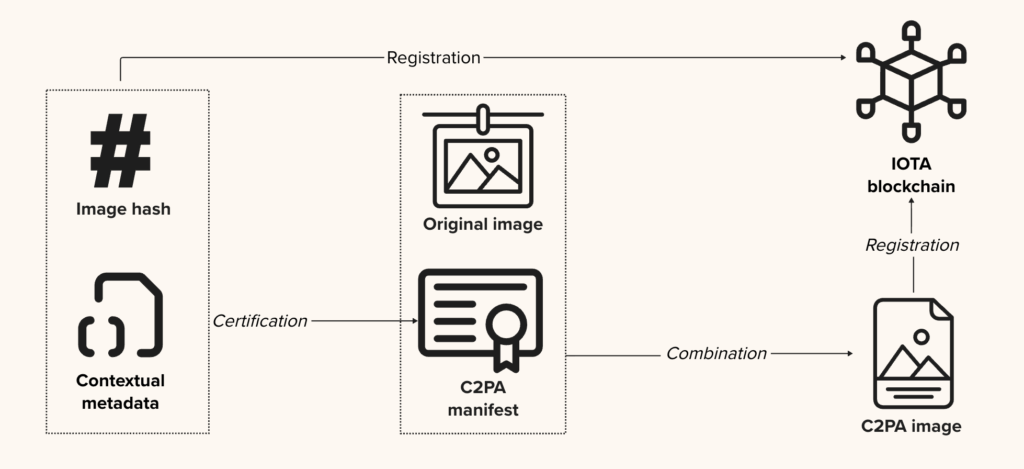
The backend server takes the image and metadata to produce a C2PA manifest, which is then combined with the image to create a digitally signed C2PA image. This represents the first version of the image as a C2PA-compliant file where all pixels and metadata are authenticated. These C2PA images are later used to produce the published images. In between, the photographer can use Photoshop to make and track edits to these images, allowing the modifications to be verifiable.
Provenance data of both the original and C2PA images are registered to the IOTA blockchain by means of recording the asset hash and some basic metadata—crucially, the image and most of its metadata are not displayed publicly on a ledger. This allows the photographer to later decide which images and metadata to provide to third parties for future auditing, and does not automatically expose sensitive information or outtakes they might want to keep private.
Store
Content online disappears at alarming rates, and for various reasons: website restructuring, domain name changes, expiration of domain name registrations, dynamic content updates, and server issues. This is the phenomenon known as link rot. In general, there is little guarantee that existing web or even archived content will continue to be stored in the future. To address this issue, Starling retrieved Albarenga’s edited photos from ICN, and stored them on decentralized systems for preservation. That way, no single centralized entity has full control of their long-term preservation, and the digital assets may become more resistant to loss or censorship.
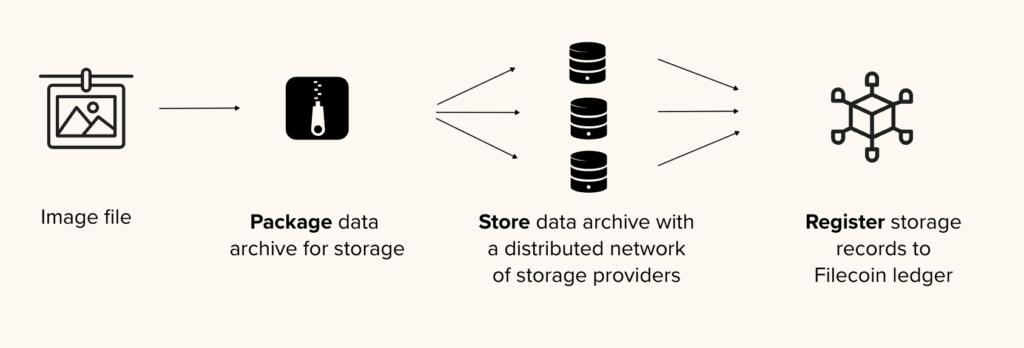
There are several emerging content storage and distribution technologies, such as Filecoin and IPFS, which Starling uses for preservation and publishing of the images. These technologies rely on storing the data in many servers, owned and operated by different people or organizations, all preserving the exact same file to provide redundancy in storage. Filecoin in particular requires participating storage providers to put up a financial collateral, which they would lose to the network should they default or back out of the storage contract before the agreed term.
Verify
After applying the decentralized preservation methods to the photos, additional contextual metadata—such as the photo caption, links to related photos and background information—are added as an additional C2PA manifest. The purpose was to provide rich contextual metadata for readers of the published article to verify and evaluate the authenticity and trustworthiness of the image.
Implementing C2PA with Four Corners
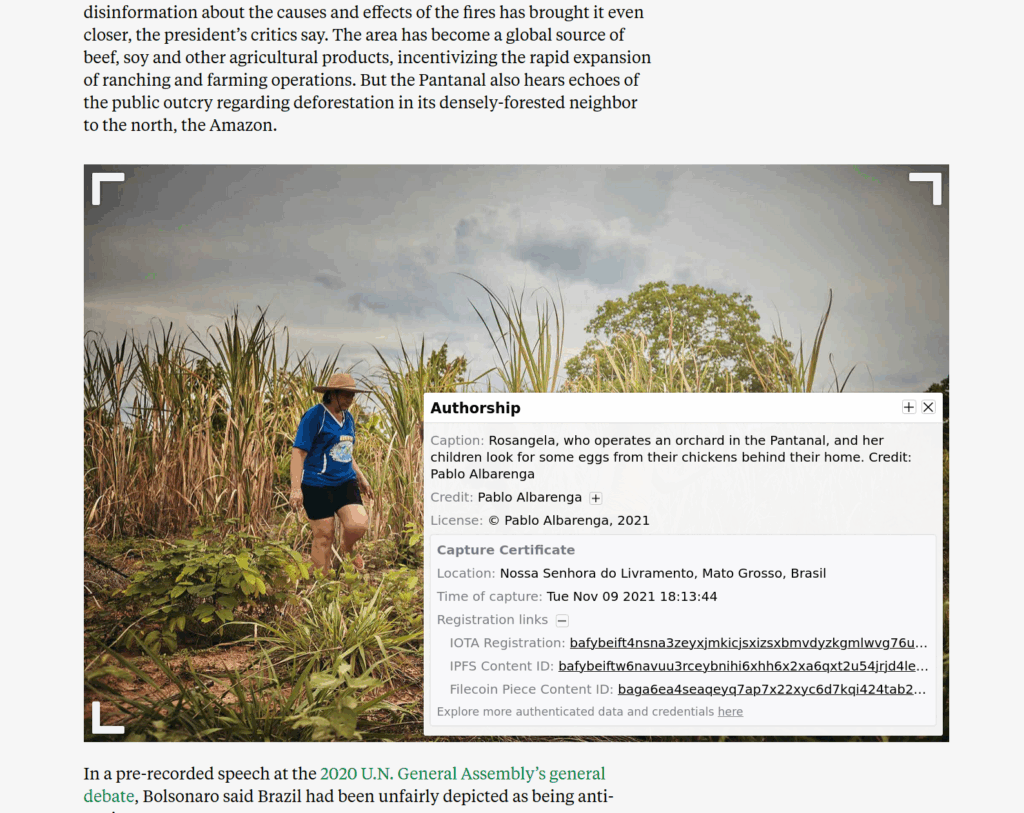
With digital media, in the absence of cryptographic attestations at source, there is little forensic evidence of the origin of an image. When retrieving an image from decentralized stores, even though it can be verified that the image has not been tampered with, there is little information available about its context and provenance. The concern is growing in the face of rapid developments with generative artificial intelligence. To address this, Starling partnered with the Four Corners Project to embed contextual and provenance information into the images, so they can be surfaced in an interactive display for readers to explore.
Records of authenticity, including the ledger where at-source integrity metadata are registered, and storage records where the original image is preserved, are encoded into the image file, attested to via C2PA, parsed and rendered onto the published story using Four Corner’s WordPress plugin, specially developed for this collaboration.
Verifying Photos with the Four Corners Design
The presentation allows specific information to be viewable in each of a photograph’s four corners, where it is available for interested readers to explore by simply clicking on them. This increased contextualization strengthens both the authorship of the photographer and the credibility of the image. In this project, the Four Corners user experience was designed as follows:
- The lower right corner shows the “Capture Certificate” (showing readers how the photo has been authenticated) and the photo’s caption.
- The lower left shows the photographer’s backstory about making the image.
- The top left shows related photos from the story.
- The top right shows related links.
To introduce the new feature, ICN displayed a short Editor’s Note below the author’s byline on the main story. Readers also were invited to learn more about the technology by clicking a link that took them to another page with more information on the technical details.
Contents
Learnings
Overall Reception and Distribution
According to the Inside Climate News team, the story was a hit, ranking as the top story on their site within the first four days after its publication, garnering almost 30,000 views. Weisbrod, the columnist and web producer, remarked: “Everything that gets more than 10,000 views is certainly a hit on our site.” The story’s popularity coincided with the Brazilian election run-off, giving both the Starling Lab and ICN a month-long opportunity to share the story widely, including through outlets like Covering Climate News, Poynter, and others.
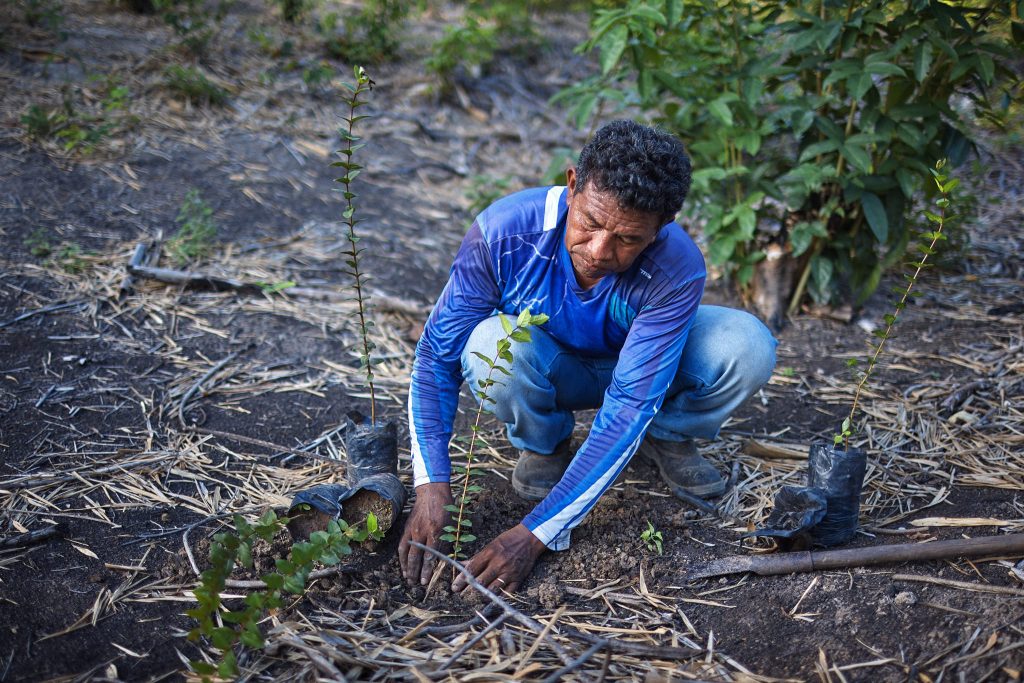
In 2023, an interview in the Columbia Journalism Review with Brazilian journalist Gabriela Sá Pessoa linked the story when discussing how the press handled Bolsonaro’s approach to environmental issues. “There was regular imagery, especially on television, of fires in the Amazon and elsewhere—starting in 2020, fires also burned out of control in the tropical wetlands—which I think played a big role in shaping public opinion,” she said. “In fact, I think this coverage partly led to [former and again-president Luiz Inácio Lula da Silva], during last year’s presidential campaign, calling protecting the environment and fighting climate change his top goals.”
Connectivity and Gear Issues
Albarenga experienced several connectivity issues with his camera’s on-board WiFi, which at times required him to reset both phone and camera—a considerable disruption to his workflow in the field. As he put it, “I had to remove the battery of the camera and reset both the camera and the phone, sometimes twice, to make [the tethering connect].”
Additionally, Albarenga reported mixed feelings towards the sound notifications intended to confirm photo authentication. Each picture transfer triggered multiple such notifications, and produced a continuous noise during bursts of consecutive shots. That being said, these audio confirmations were helpful in keeping him focused on what was around him, instead of needing to pull out and look at his phone. Albarenga suggested reducing the number of notifications per image, and using a distinct sound for errors to further assist hands-free field capture and feedback.
Upload and Workflow Efficiency
Uploading images proved to be another significant issue for the photographer, who had to deal with slow internet speeds in remote areas of the country. Albarenga’s first attempt to upload around 200 photographs overnight failed, leaving many not uploaded. Crucially, the mobile application lacked the ability to filter and sort, making the identification and selection of failed uploads a painful endeavor. He said, “after [some of the photos] didn’t upload overnight, I had to [scroll through and] visually check which ones had the checkmark on them.”
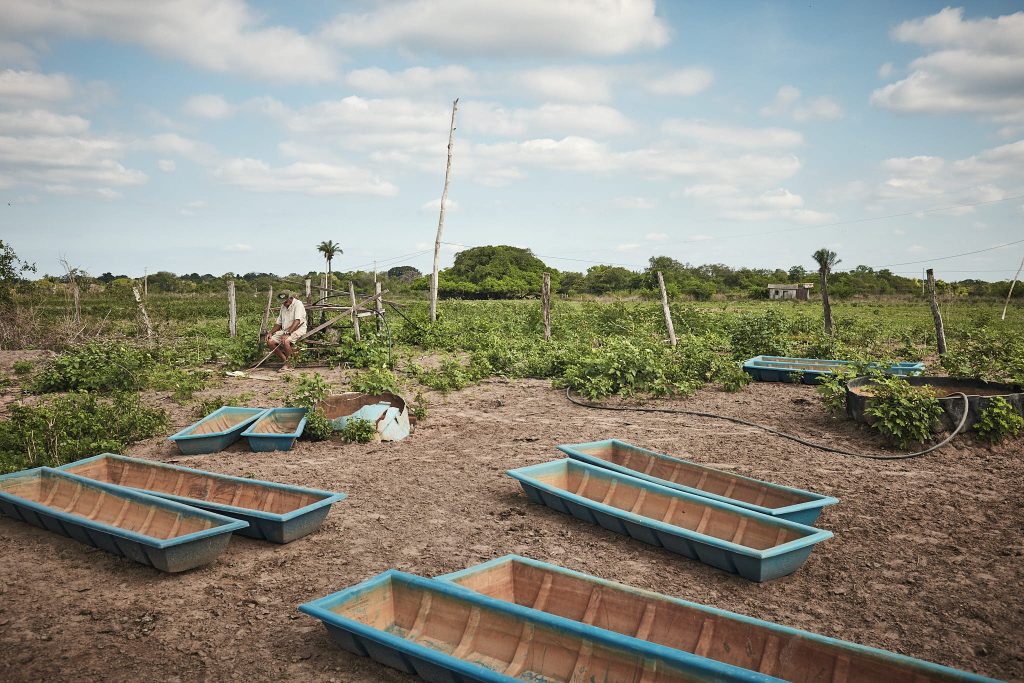
Albarenga also remarked that the C2PA-compatible editing workflow through Photoshop was not particularly fit to handle a large field photoshoot, which is a common need for visual journalists. “Captioning through the phone app or one-by-one in Photoshop would take me several days,” he said, noting that he would have preferred bulk editing through tools like Lightroom or Photo Mechanic.
Reflecting on the two issues above, Albarenga saw opportunities in the future: “I think many of these issues will be resolved when the authentication is made in the camera itself.” It would also require broader adoption of C2PA by industry-standard editing tools, in this particular case, ones that photographers commonly rely on for bulk editing.
Presentation Challenges
“The entire ICN masthead was pleased with the way the Four Corners technology finally worked on our site and recognized the value of being able to provide information that verifies the authenticity of the images,” said Senior Editor Kordas. “We’re eager to see how these technologies develop and are adopted by a wide range of news media.”
Enabling readers to dive deeper into the visual assets was especially important for this story. As Weisbrod put it: “With topics related to climate change, which can be scientifically, politically and socially complex, being able to provide more details about the story behind photos can be a valuable way to expand ICN readers’ knowledge.”
Part of the success of the launch was due to the amount of planning and anticipation of technical challenges. This required coordination between teams to address potential glitches. After the Four Corners presentation was readied with all the assets assembled (authorship, ethics statement, backstory, related images, related links, metadata, certification of authenticity), the technical team tackled frontend issues, particularly on iOS and involving the lazy-loading of CAI tools by Four Corners. Kordas expressed hope that eventually these technologies would reach a “plug and play” level, making implementation smoother and less disruptive to the production process.
Contents
Archive
Special Thanks to Inside Climate News
Founded in 2007, Inside Climate News is a Pulitzer Prize-winning, nonprofit, nonpartisan news organization that reports on and provides analysis of climate change, energy and the environment. Senior Editor and award-winning photojournalist Michael Kordas oversaw the editorial process, editing Jill Langlois’s story and Pablo Albarenga’s photographs. Columnist and Web Producer Katelyn Weisbrod handled production, technical implementation and story layout. Langlois is an independent journalist who has been based in São Paulo, Brazil since 2010. Her work, which focuses on human rights, has appeared in National Geographic, The New York Times and The Guardian. Pablo Albarenga is a documentary photographer and visual storyteller who has documented land conflicts in Latin America, involving indigenous people. He is a National Geographic Explorer, a grantee of the Pulitzer Center, and was selected in 2020 as the photographer of the year by the Sony World Photography Awards