

Jan 20, 2026 Event: Thomas Friedman and Craig Mundie on AI
Watch the full discussion: You can catch the complete recording of the event on YouTube here.
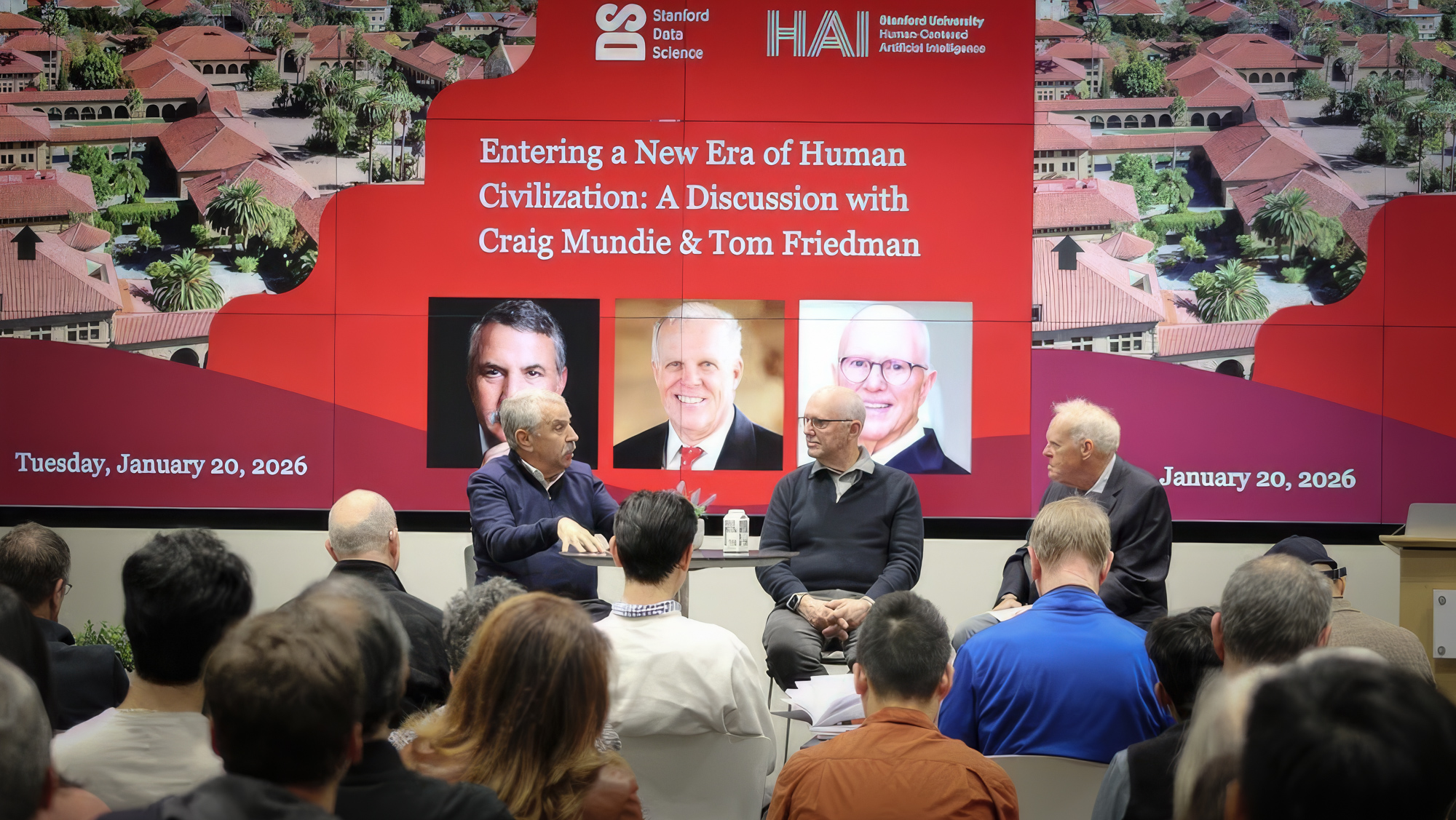
Last week, the Starling Lab returned to the Gates Computer Science Building at Stanford for a conversation that felt less like a standard tech panel and more like a civilizational status report.
Co-hosted alongside the Stanford Institute for Human-Centered AI (HAI), the Freeman Spogli Institute for International Studies, and Stanford Data Science, the event “Entering a New Era of Human Civilization” brought together three definitive voices: Craig Mundie, Thomas Friedman, and John Hennessy.
The Intersection of Three Worlds
The discussion centered on a daunting reality: we are currently living through a collision of technology, journalism, and history. As AI continues to scale, the boundaries between these disciplines are blurring.
-
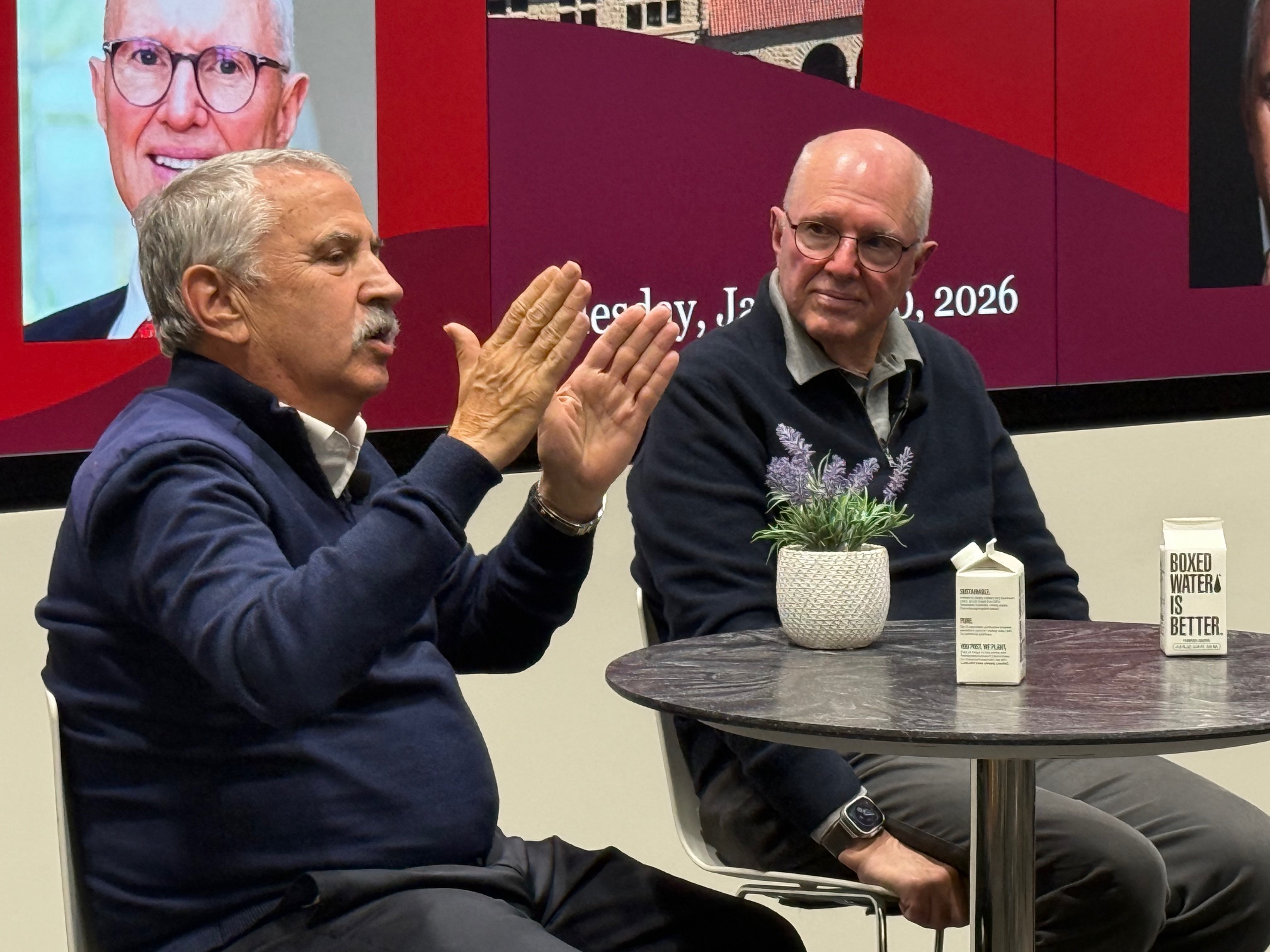
Thomas Friedman framed our current moment as a shift as profound as the invention of the printing press, but moving at a velocity that traditional institutions are struggling to track.
-
Craig Mundie provided a sobering look at the technical frontier, emphasizing that the “New Era” isn’t coming: it’s already here.
-
John Hennessy anchored the talk in historical context, reminding us that without a reliable record of the past, the future of democracy remains fragile.
The Starling Perspective: Moving Upstream
At Starling, we often talk about the difference between detecting a lie and proving the truth. As AI makes the “arms race” of deepfake detection increasingly difficult to win, the need for robust, technical frameworks to verify facts at the source is no longer optional.
We left the Gates Building more convinced than ever that the solution lies upstream. Our ongoing work in cryptographic authentication and data integrity provides the necessary “trust layer” for this new era. By using decentralized web protocols to seal and verify information from the moment of capture, we aren’t just fighting misinformation—we are building a sanctuary for facts.
What’s Next?
The “New Era” requires a new architecture for trust. We are deeply grateful to our partners and to everyone who joined us in person to wrestle with these big questions.