

Timestamp Verification

We utilize distributed ledgers to establish an immutable “proof of existence” for digital media and its metadata. By anchoring cryptographic fingerprints on public consensus networks, it creates a tamper-evident record of the absolute moment an asset was first observed.
This “birth certificate” for digital data shifts the verification model from reactive detection to affirmative proof, ensuring that the origin and integrity of critical information remain indisputable against the threats of revisionism and synthetic manipulation.
YEAR
2020-24
PARTNERS
Hedera
ProvenDB
OpenTimestamps
Numbers Protocol
Solana
LINKS
– Time for Trusted Timestamping
– Reuters collaboration, ProvenDB anchored on Hedera
– ‘Mom I See War’, a collection of drawings from Ukrainian children, anchored on the NEAR blockchain using the Numbers Protocol.
The Problem
Establishing the originality of a piece of content, and that a given piece of media is the first known version has been a conundrum since the invention of written communication. Whether one is looking to resolve disputes of which version comes first, or to prove media was created before the advent of certain AI technologies, a timestamp that can be verified with a trustworthy third-party can be a helpful solution. Verifiable timestamping can be used as a part of the digital media creation, preservation, and edit processes.
JOURNALISM
By anchoring field footage hashes on public ledgers, newsrooms can maintain an indisputable record of truth that survives both link rot and malicious denialism.
HISTORY
By registering high-fidelity fingerprints of historic records before the generative AI inflection point, institutions ensure that primary sources can be definitively distinguished from synthetic noise.
LAW
Third-party ledgers act as record holders from which to derive strong claims about integrity and point of origin of a digital item.
The Solution
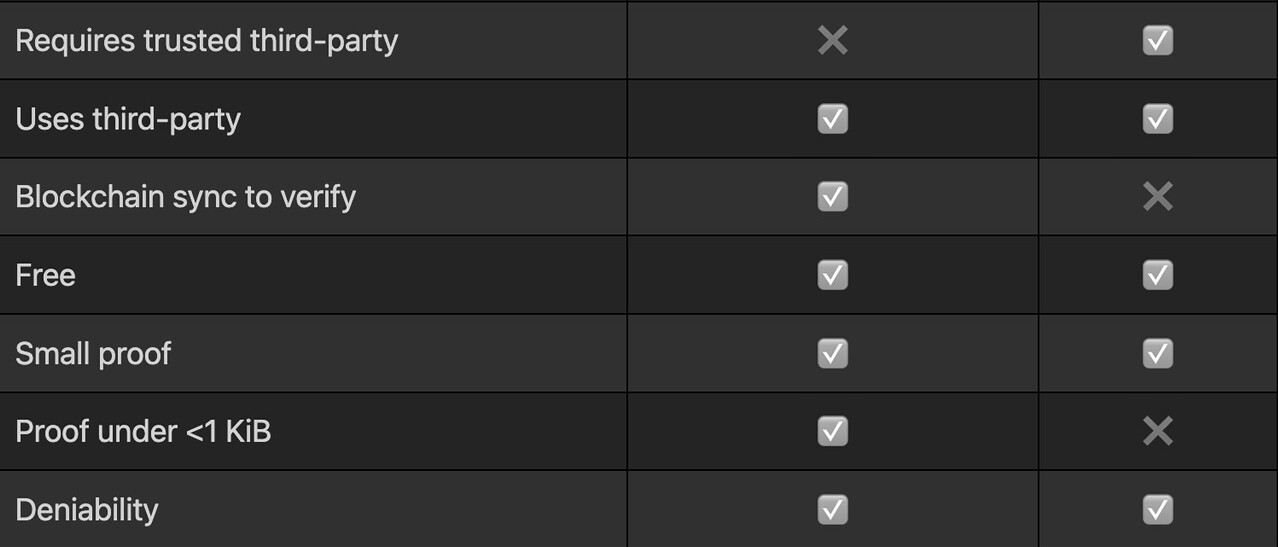
Starling has used several Merkle tree-based technologies to efficiently create verifiable timestamps on public ledgers, and developed workflow using systems such as ProvenDB with Hedera Consensus Service anchors, OpenTimestamps proofs anchored on Bitcoin, as well as direct registration of media assets on many public blockchains. In all these cases, the block height is used to establish a verifiable timestamp for the registered digital media.
Adding an immutable proof of existence backed by distributed ledger consensus serves to establish a first known creation of digital media that is nearly impossible to refute.
READ FURTHER
Further to this work, we have created a reference implementation of timestamped databases in a project called ‘Authenticated Attributes’ that aims to integrate with digital media user interfaces and collaboration tools.
We have also created an offline, SMS-based silent registration prototype based on 5G technology, and integrating with the latest C2PA-capable cameras.