

Radiance Fields

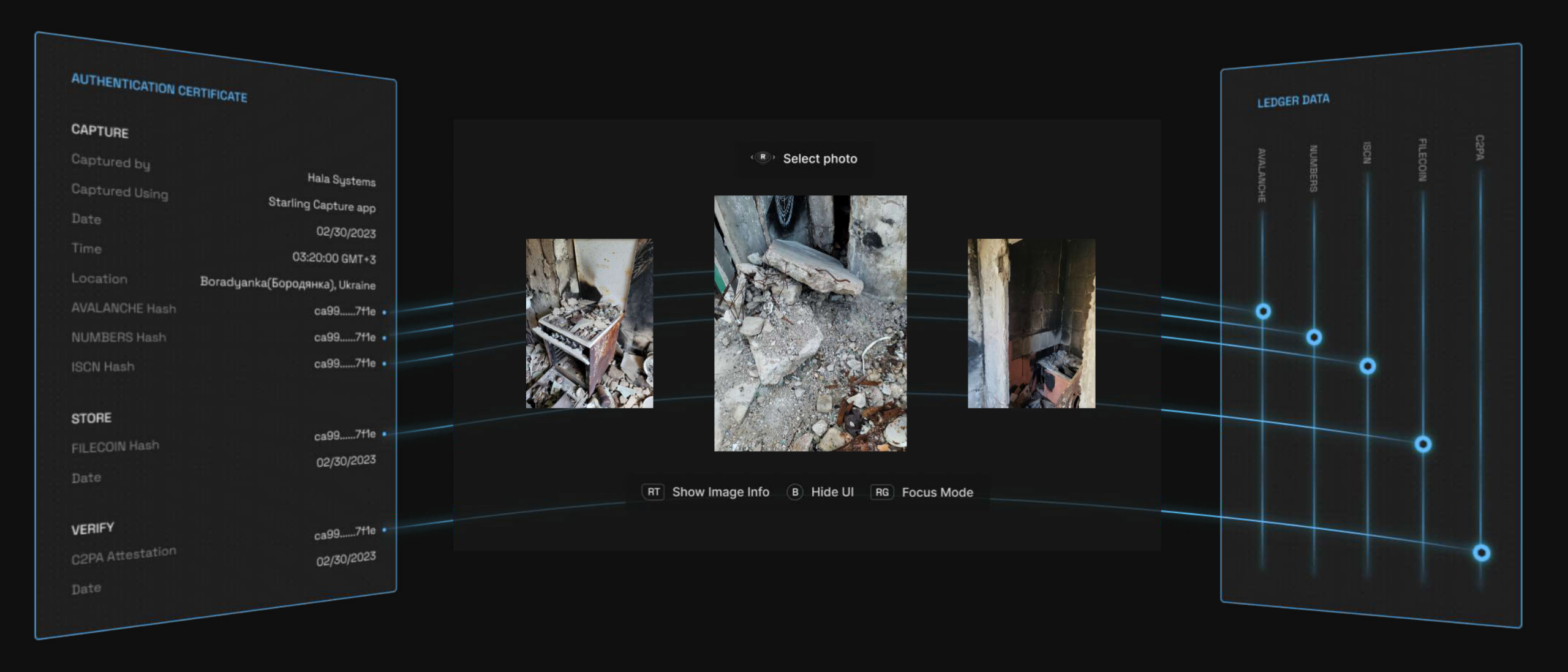
Starling Lab’s verifiable radiance fields prototype is an experimental pipeline for embedding cryptographic provenance into 3D reconstructions using Neural Radiance Fields (NeRF) and 3D Gaussian Splatting (3DGS). As radiance field techniques are combined with generative AI to create navigable environments from sparse, or even single, 2D photographs, they blur the boundary between documented reality and algorithmic interpolation. The verifiable radiance field prototype anchors specific points in a reconstructed scene back to their authenticated source images, creating a tamper-evident chain of custody that persists through the non-deterministic reconstruction process.
YEAR
2024-26
LINKS
Exploring Authenticity in NeRF and 3DGS
By Basile Simon
Paper: Verifiable Reality, comparing streaming performance for both algorithms
The Problem
3D reconstruction is shifting from traditional 3D capture for photogrammetry and radiance fields, created from scores to thousands of images of a scene, to generative-AI-augmented methods that recreate convincing environments from far fewer images. The tradeoff is that these methods fill spatial gaps algorithmically, generating plausible geometry, lighting, and texture where no source photograph exists. Without a way to distinguish authenticated representations from hallucinated data, these models risk being dismissed in high-stakes environments like courtrooms, newsrooms, and archives — regardless of how much genuine source material they contain.
JOURNALISM Field reporters using 3D capture to document conflict zones or disaster sites need editors and audiences to trust the resulting environment. Verifiable radiance fields allow any point in a published 3D scene to be traced back to its source image and that image’s content credentials.
HISTORY Spatial documentation of historical sites produces radiance field models from archival and contemporary photographs. Embedding provenance preserves the distinction between what was photographed and what was computationally inferred.
LAW For 3D scene reconstructions to serve as evidence, chain of custody must be demonstrable. A verifiable radiance field links each element of a 3D environment to its forensic origin, distinguishing documented geometry from algorithmically generated fill.
JOURNALISM
Radiance Fields technology allow newsrooms to deploy hyper-realistic 3D reconstructions of complex scenes, and in record time. A layer of verifiability might support journalists in defending their reporting against accusations of AI hallucination.
HISTORY
This technology protects digital heritage collections against revisionism by binding “digital twins” of cultural sites to their unique physical origin.
LAW
We wonder what might be the path to supporting non-deterministic AI models into becoming court-admissible records. We believe that hardware-anchored signing and cryptographic registrations might provide the “transparency indicators” required for forensic examination.
The Solution
Our verifiable radiance field work grows out of active spatial documentation projects, including 3D reconstruction of Japanese American internment camp sites, Armenian heritage sites, and conflict zones Ukraine, where the distinction between captured and computed reality has direct consequences for historical and legal integrity.
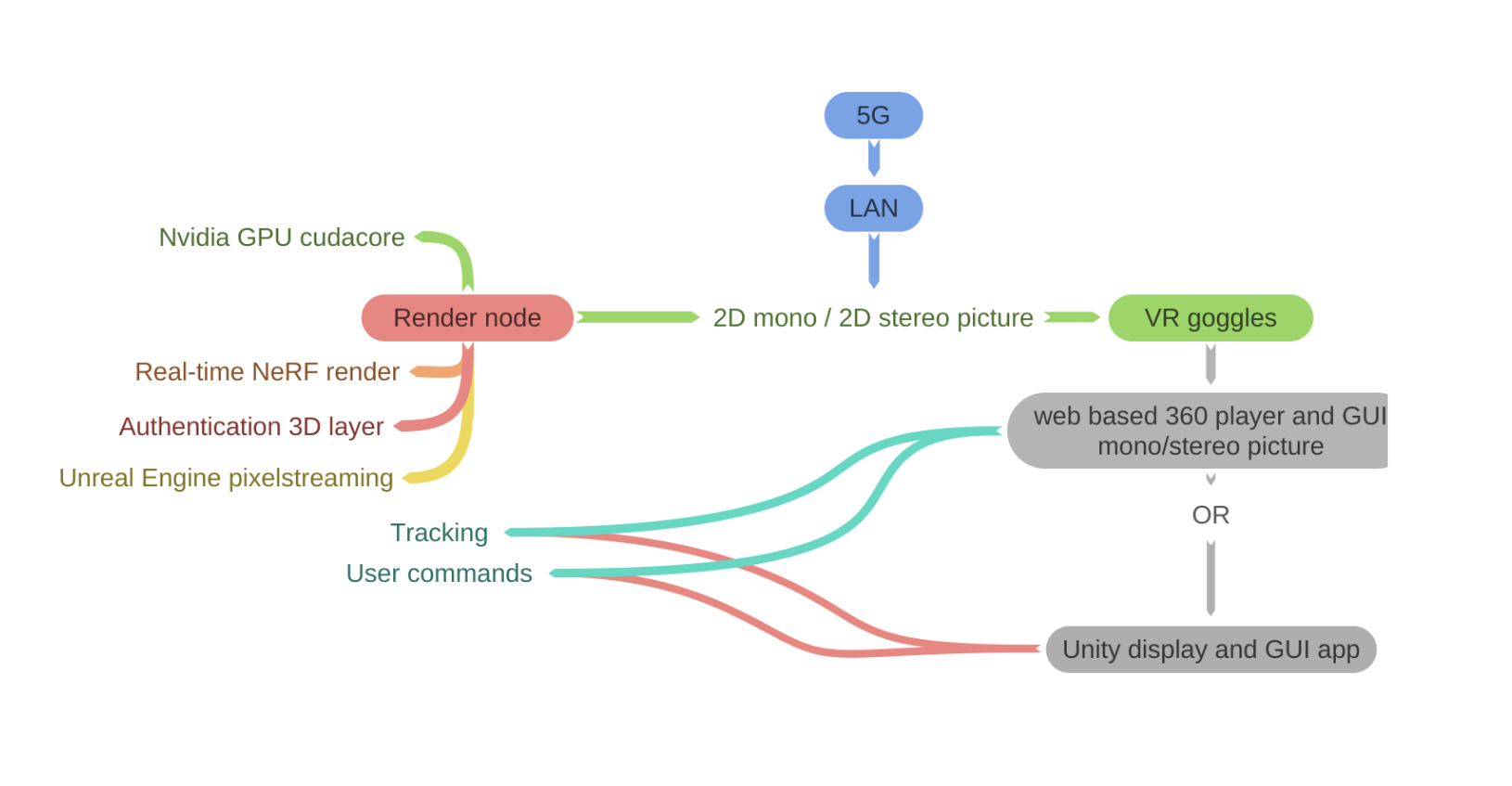
We bind C2PA content credentials to specific points within a radiance field, linking them to authenticated 2D source images. A multi-ledger approach, using chains such as Avalanche, Numbers, Filecoin, and ISCN, creates redundant, tamper-evident records. In practice, a viewer navigating an immersive environment can query any region and see which source photographs contributed, when they were captured, and whether their content credentials are intact. The system is designed to function on standalone VR hardware via optimized streaming protocols.
This work is at an early experimental stage. The core open problem: radiance field reconstruction is non-deterministic, meaning the same source images can produce slightly different 3D outputs on different runs. Maintaining a verifiable link through a process that doesn’t produce identical results each time remains an active area of research, and we welcome collaboration from teams working on deterministic or reproducible reconstruction methods.