

Archiving 10,000 Web Pages of Weaponized Narratives in support of the DFRLab
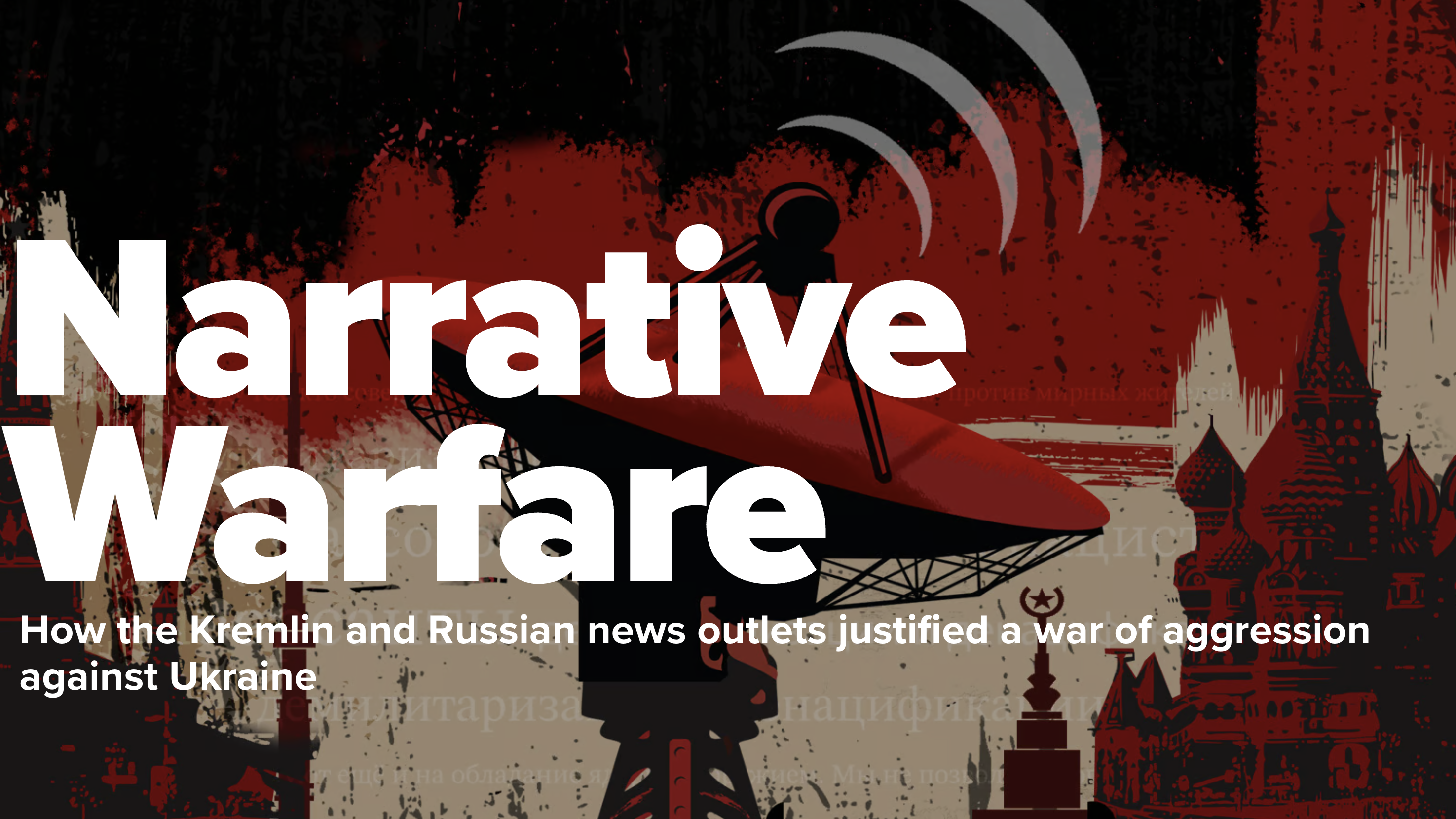
We are thrilled to announce our participation in an extensive archiving initiative supporting the Atlantic Council’s Digital Forensic Research Lab (DFRLab). This significant project involves preserving 10,000 web pages as part of the research for the “Narrative Warfare” report, providing a robust resource for understanding the complex landscape of digital misinformation and information warfare.
The “Narrative Warfare” report, published by the DFRLab, delves into the intricacies of how narratives are weaponized in the digital age. The report uncovers how state and non-state actors manipulate narratives to influence public perception and destabilize societies.
The dataset of 10,000 web pages represents pro-Kremlin news publications from the 70 days prior to the ground invasion (Dec 16, 2021 to Feb 24, 2022). The team at the DFRLab identified and tracked five primary narratives pushed in support and ahead of the invasion of Ukraine.
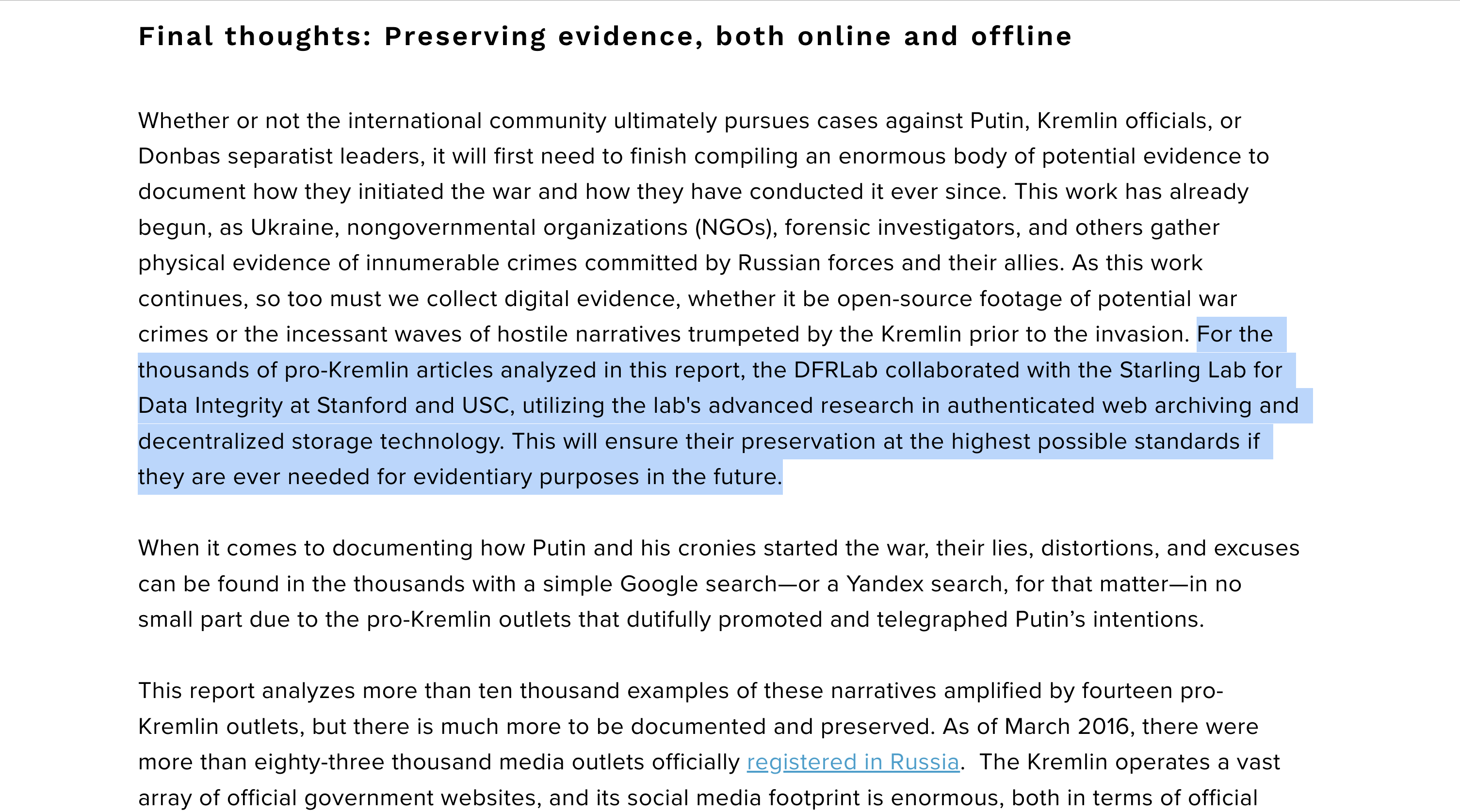
Starling Lab, renowned for its pioneering work in data integrity and digital preservation, played a crucial role in this initiative. By leveraging advanced technologies and methodologies, Starling Lab ensured that the archived web pages were meticulously preserved and accessible for future research and analysis. This collaboration underscores the Lab’s commitment to safeguarding digital content and promoting transparency in the digital realm.
Methodology
Given the risk to the material once the report would be published, we preserved and durably stored the material on the request of the DFRLab. Director Andy Carvin’s team shared a spreadsheet containing, for each URL, original research metadata such as the associated broad narrative, the source pushing this narrative, and the article’s reach on social media.
Each page was crawled individually, meaning that all its content (media, code, style) were downloaded in a package permitting to “replay” it in the future and offline, independently of whether the original content would be deleted. Archives were prepared and packaged up using the cloud tools provided by WebRecorder, and all the content cryptographically signed by Starling Lab’s SSL certificate. For more details on these authenticated web archives, read our Dispatch on WACZ files.
The resulting dataset, totalling 400GB, can be accessed by members of the “Dokaz” initiative on request. While each page can be individually browsed as it was captured at the time, regardless of whether it went away, we are looking for support to produce an explorable, searchable interface to facilitate access for researchers.
Conclusion
In conjunction with the DFRLab’s “Dokaz” initiative, which focuses on preserving and verifying evidence in conflict zones, this archiving effort marks a significant step forward in the fight against digital misinformation. The “Dokaz” initiative, supported by Starling Lab, aims to provide reliable and verifiable digital evidence that can withstand scrutiny and support investigative journalism and research.
This collaborative effort between Starling Lab and DFRLab highlights the power of interdisciplinary partnerships in addressing the challenges posed by digital misinformation. By combining expertise in data integrity, digital forensics, and narrative analysis, this project not only enhances our understanding of narrative warfare but also strengthens our ability to counteract its harmful effects.
For more information, visit the Atlantic Council’s Narrative Warfare Report.