


The Problem
Losing control of data can happen when journalists, historians, or legal experts least expect it. SD cards can be seized during border crossings, left behind in a taxi, or stolen from a hotel room. Evidence that has been captured on an SD card, and which has not yet been anonymized, might carry geolocation or identity information that can lead authorities or militants to vulnerable people being photographed or interviewed. Another risk to unencrypted data on an SD card is that it could be manipulated undetected when not in one’s possession, with files erased or modified.
Prototypes are being tested by Starling Lab that both encrypt and hide important data captured by those in the field.
The Solution
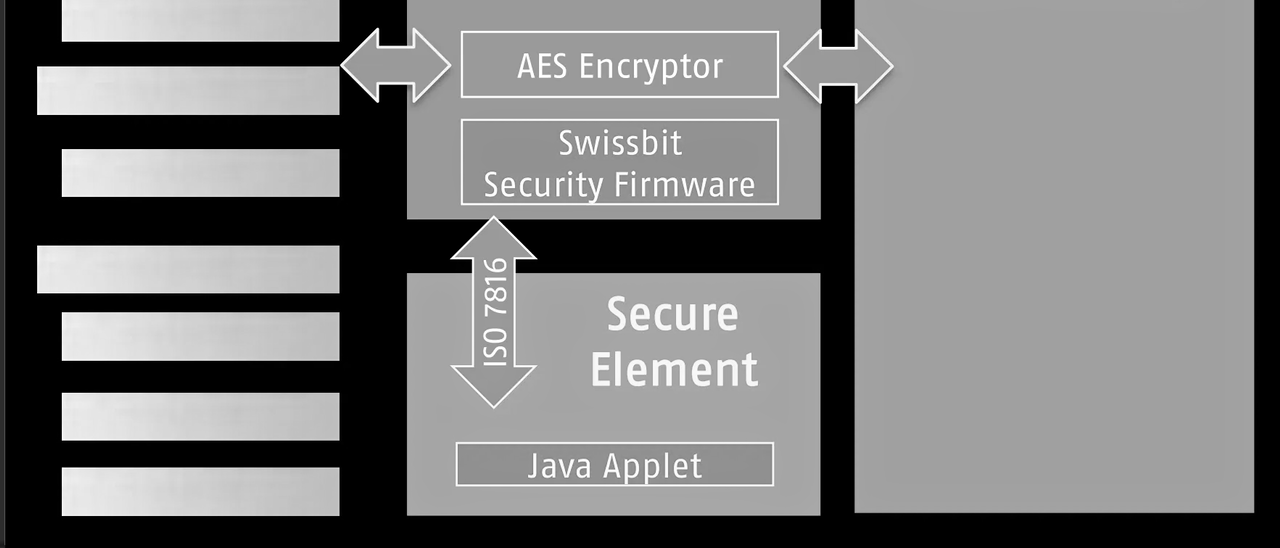
Starling Lab is collaborating with industry partners including Swissbit, a leader in secure storage, to deploy hardware-encrypted SD cards that protect media the moment it is written to disk. This prototype ensures that digital assets are secured independently of the camera’s software vulnerabilities.
The solution creates an “encrypted tunnel” between the camera lens and the storage medium. Swissbit’s hardware-based encryption automatically protects image and video data without requiring additional software on the capturing device, ensuring that media cannot be manipulated or viewed in transit.
To protect the safety of practitioners in the field, the prototype relies on hidden partitions on the SD card. Sensitive files are stored in a manner that makes them impossible for unauthorized parties to discover or decrypt (even if the physical card is seized and inspected), while providing a critical layer of plausible deniability.