

Mapping the Web3 Ecosystem for Educational Curricula
Mapping the Web3 Ecosystem for Educational Curricula
Reading Time: 5min

Contents

Background
Instructional modules were developed by Starling Journalism Fellowship Director Ann Grimes and 2022 Starling Fellow Aaron Huey. Working with Stanford Electrical Engineering Professor Tsachy Weissman’s interdisciplinary SHTEM summer internship program for high school and community college students, Huey and Grimes designed and experimented with a curriculum that addressed the problem of mis/disinformation and introduced how new “web3” technologies could be applied and potentially reduce information uncertainty and increase users trust in journalism and the media writ large.
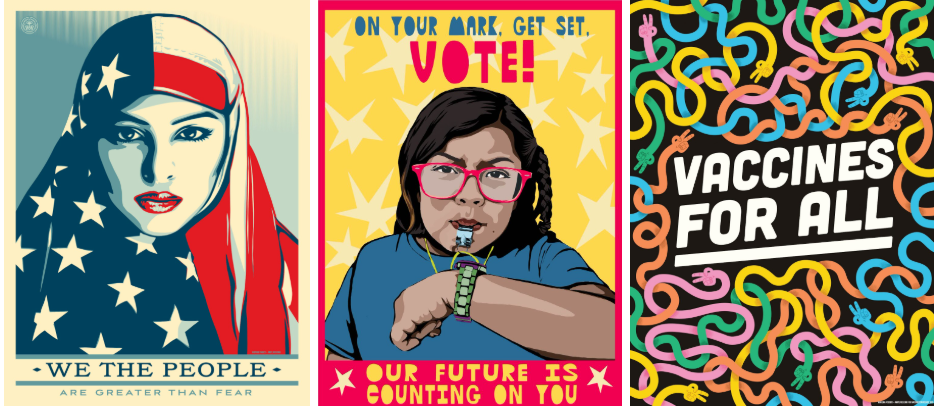
Grimes is a veteran journalist who previously held senior editorial positions at The Washington Post, the Wall Street Journal and served as Director of Stanford’s Graduate Program in Journalism. Huey is a National Geographic photographer, former Media Experiments Fellow at Stanford’s Hasso Plattner School of Design (the d.school), and Founder and Chief Creative of Amplifier, a nonprofit design lab that builds art and media experiments around technology, cultural and social justice movements. Amplifier’s experiments are built on open source art, and the human centered design process, with the goal of realizing new possibilities when analog and digital technology merge. Huey’s combination of art and storytelling have resulted in the creation of Amplifier’s global art phenomenon “We The People” with collaborator Shepard Fairey, the Sherpa Photo Fund, and a recent series of Pre-Colonial History and Cultural Heritage lessons in virtual reality, and now metaverse spaces, that will become part of K-12 curriculum across the U.S. His Bear Ears National Monument VR experience won the 2019 Webby for best VR Interactive Design.
Contents
Framework
The Challenge
As a Starling Lab 2022 Journalism Fellow, the goal of my project was to help answer the question “How might we design for authenticity?” through the creation of a 12 week class this past summer. To be more specific, we were building a curriculum to answer the question : “How might we visualize that design so that we can share this process for broader understanding and adoption?”
The basis for our work was the Starling Framework for authenticity and its three stages of capturing, storing, and verifying information. The guiding principle at The Starling Lab is establishing “provenance” as the backbone of authenticity and integrity of digital content. To do so, the Lab follows a three-step framework:
- Capture: Starling prototypes mobile apps and camera firmware to authenticate digital content and metadata at the point of capture.
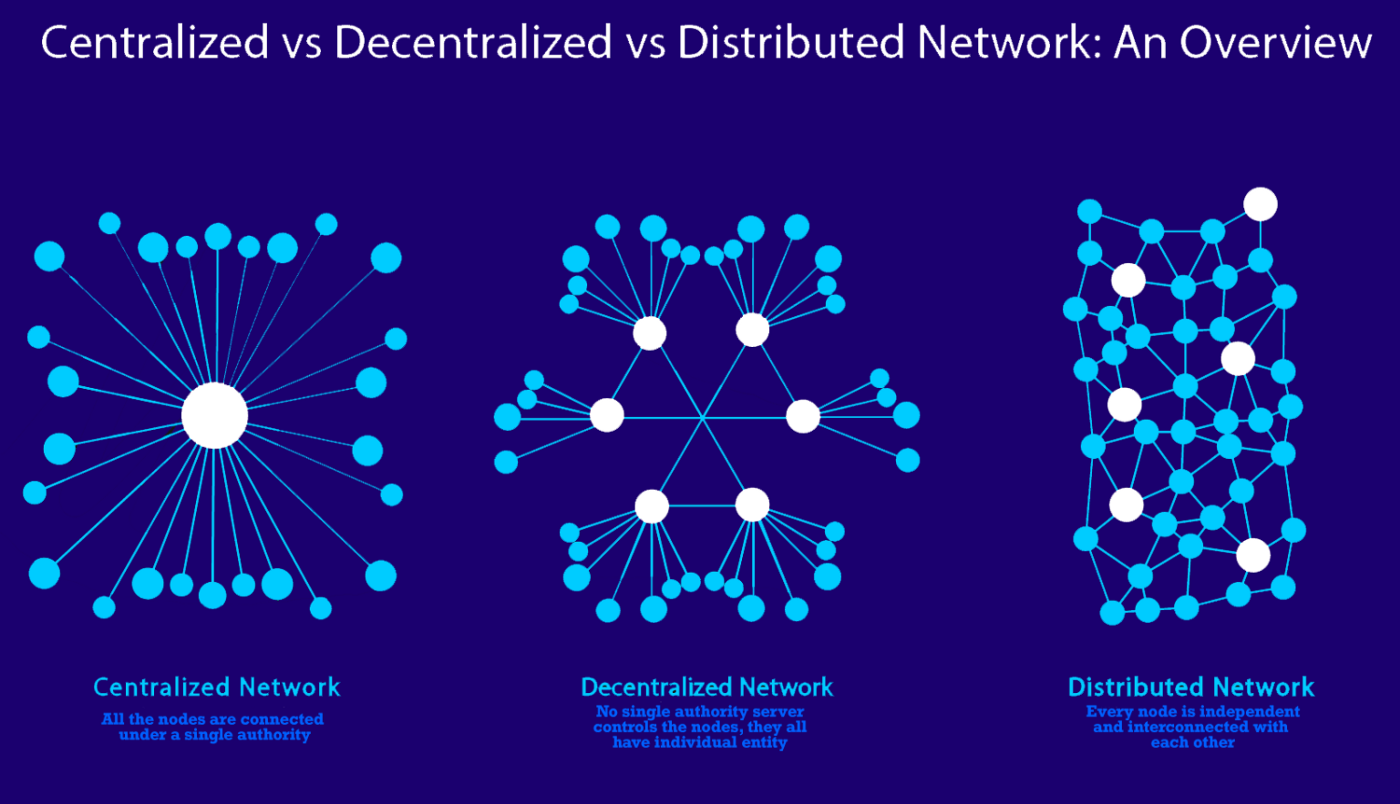
- Store: Starling researches how advanced cryptography and decentralized networks can securely distribute and store content over time.
- Verify: Starling experiments with immutable ledgers to register digital content, enabling experts to audit, or verify, the provenance and authenticity of that content.
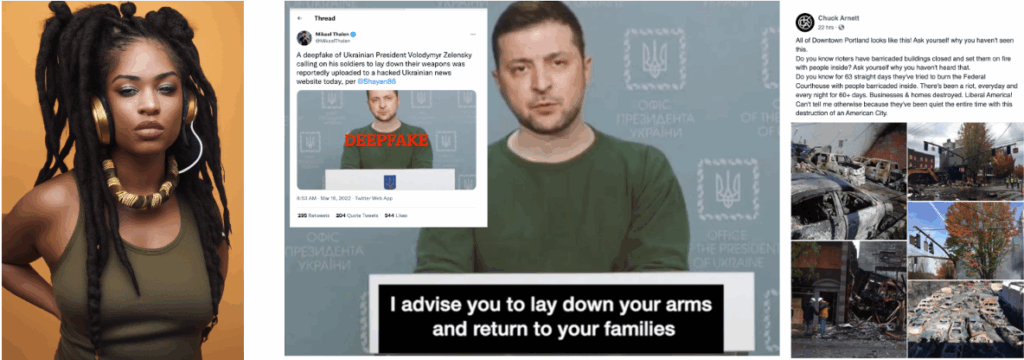
Journalism has always been the ground we stand on, but in recent years the terminology “post truth world” has been circulating more and more. It has felt harder and harder to verify information with the exponential growth of image creation on mobile devices and social media “news.” And harder still as Artificial Intelligence image creators have become publicly accessible this summer. Journalism, the very definition of verified information, and more specifically journalists, need new tools in this fight to root us back in reality.
We are currently on the cusp of a “new internet,” commonly referred to as “Web 3.0,” and with this moment comes an opportunity to redesign systems to protect not only our personal data but also the integrity of our news media; truth itself.
The Prototype
To unpack this framework and realize its potential, we tasked a class online that included Stanford undergraduates and high school students from around the world with distilling the information and answering these questions to create a toolkit. The audience for the toolkit was to be a range from middle school students to their peers in high school to their not-so-tech-savvy elders. But (!) there was also always the potential that their learnings and final project could be the first draft of a training tool for media professionals, tech teams at media companies, educators, and really anyone who teaches or touches media in this rapidly evolving world of mis and dis-information.
Coming from my background as the founder of Amplifier.org, and from a decade of building viral campaigns for grassroots movements around the world, I know that visual storytelling is most effective when it is both simple and visually striking, especially when attempting to explain complex tech tools and tricks.
And as a journalist myself, having covered issues around the world for National Geographic, the New Yorker, the New York Times, and many more, I know that our information is both more valuable and more in danger than at any point in my life.
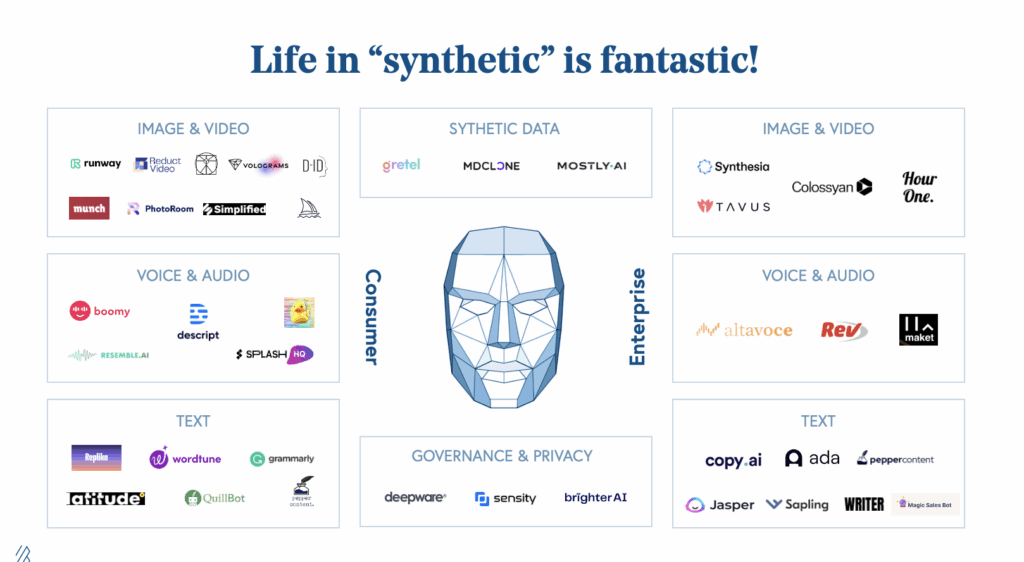
Deepfakes (made with Artificial Intelligence) and what are called cheap fakes (photoshop or similar simple manipulations) are seen more and more in the spread of purposeful dis-information. But equally as dangerous are the false stories and out of context images spread as social media “news” by populations deep in the trenches of political and culture wars around the world. Add to that the venture capitalists who see big profits ahead in AI generated content and editing, and the public appetite for new text-to-image and text-to- video capabilities and we have the perfect formula for a world where we will soon no longer know what is real and what is not without further proof of the images source and alteration history.
Contents
Technology
Working with Ann Grimes from the Starling Lab, I was tasked to help lead our class of students Over the course of eight weeks – they analyzed the various types of mis-and disinformation in both traditional and social media. They also analyzed the Open Source players operating to combat the problem, learned the foundation of the Starling Framework, and themselves began building tools to help others better understand both the threat and the response.
Not unlike what happened at the dawn of the dot.com era, the story of “Web 3” has eluded most of the public and, to be honest, most professional journalists as well! So to keep things from getting too abstract we developed a context for upstream and downstream solutions. From downstream failures like social media platforms debunking bad content in a game of “whack-a-mole.” To downstream regulation, which was also not working. We then shifted our vision upstream. We asked: What if we used new “web3” cryptographic and decentralized technologies to tackle the problem and authenticate digital content from the beginning, from the “capture” stage?
But before any of that, and to navigate this project we had first to translate potentially confusing terminology and basic concepts, as well as creating a simple map of the journey from “Web 1” to “Web 2” to “Web 3.” Clear and simple visual storytelling on this topic has been needed for some time now, especially because what’s out there now is written way above most peoples’ heads. All of this needed to be in layman’s terms that could be understood by anyone.
Beyond finding and refining strong visual tools we needed students to place them in a narrative story arc, identifying and then answering the questions that arose.
We first introduced key concepts and terms: metadata, provenance, cryptography, decentralized networks, blockchain – and more. We considered hope vs. hype. We talked about “opportunity costs.” What would journalism lose if – as at the dawn of Web 2 – media professionals were too slow to understand and run with the opportunities the Internet opened up? (Only to get run over by the platforms).
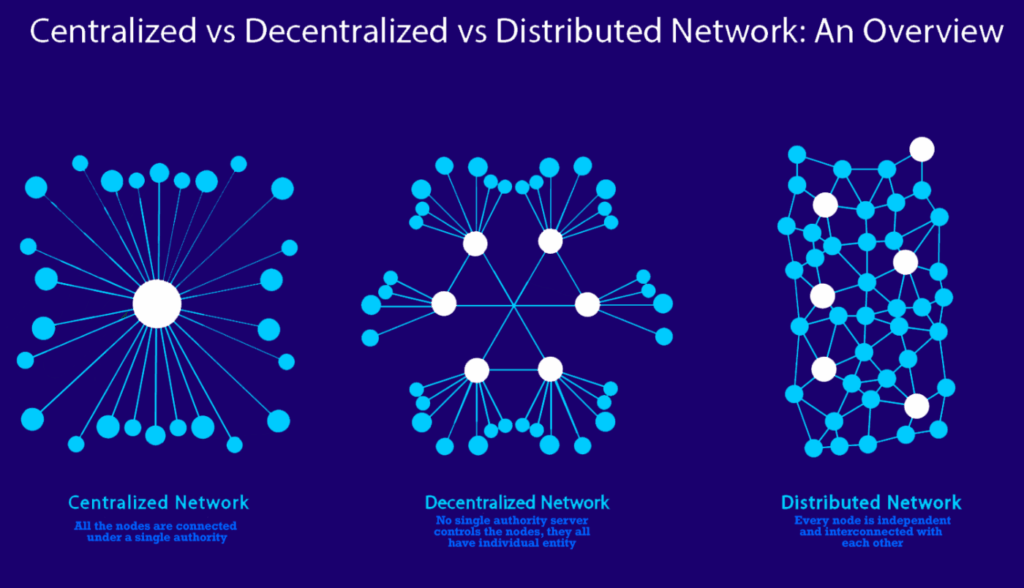
Once the base level of understanding was secured with a set of visuals, we turned to explaining and mapping the Starling framework and new journalistic best practices for capturing, storing, and verifying digital content. We began with a “Lit Review” of readings and studies and then built a library of existing infographics of previous attempts to explain the difficult terminology of Web 3 and the history of the internet. Students also created their own attempts at distilling and simplifying this information and added to that database.
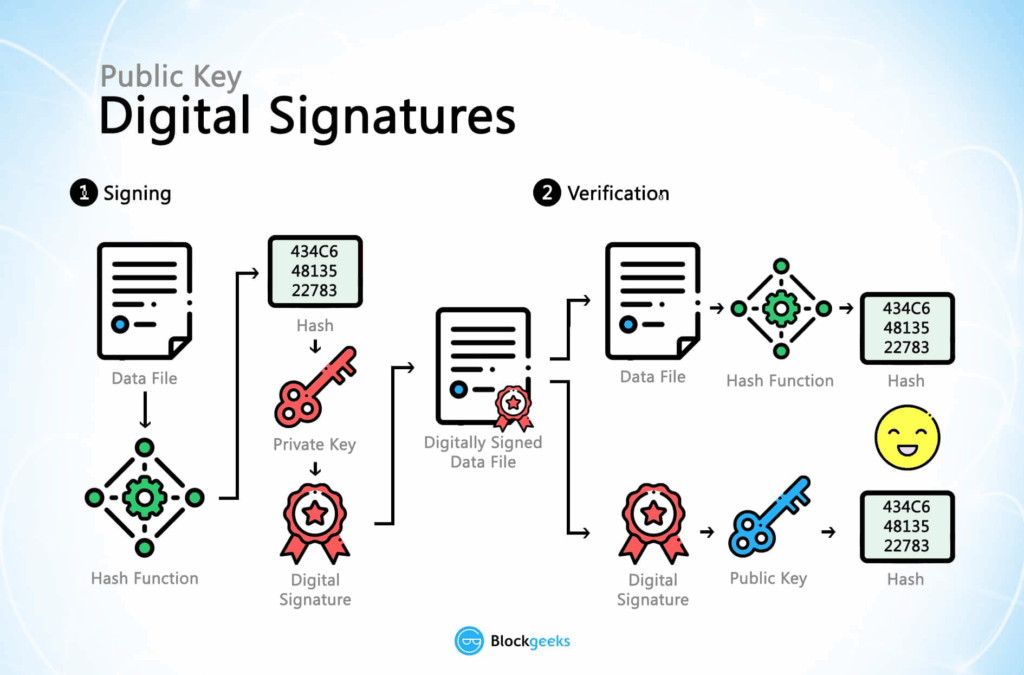
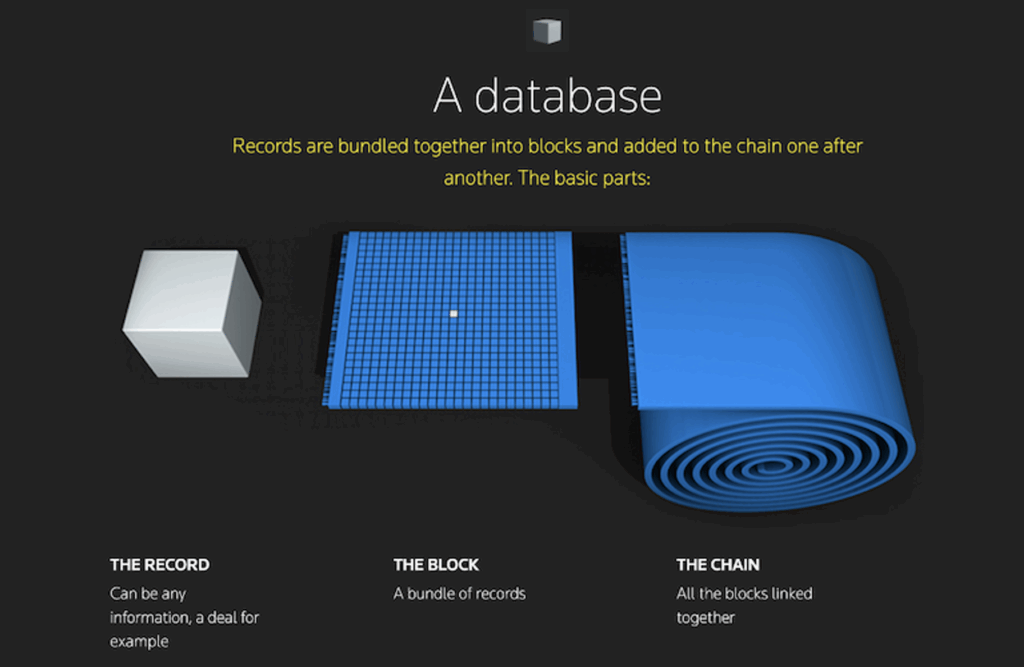
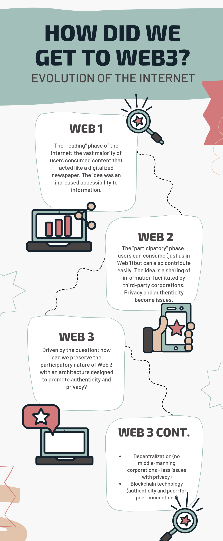
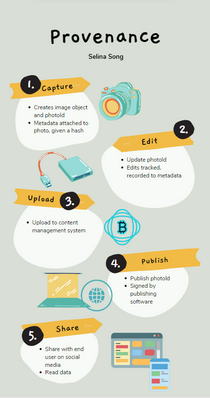
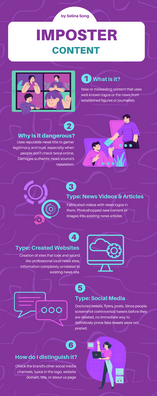
We also invited speakers, leaders in their fields, all of whom took different approaches but who shared similar solutions in their quest to show provenance. These lectures and testimonials from working professionals like Adobe’s head of Advocacy and Education Santiago Lyon, Starling Lab Founding Director Jonathan Dotan, and The New York Times R+D Lab’s Deputy Director Scott Lowenstein, all of whom made the story clearer and its relevance more obvious and real.
Contents
Learnings
The narrative arc of the class turned our weekly lessons into the roadmap for the student’s final video. That 10-minute video, the final output of this journey, is the first draft of an educational curriculum that can be evolved into a tool for widespread distribution at the collegiate and high school levels, and to media professionals around the world. The students worked as a team, having a wide range of skill and knowledge, and in the end were able to deliver a usable lesson by distilling down all that had been learned over the 8-week course.
The Challenges (the feedback) and Lessons Learned:
Part of the learning journey of this project was acknowledging that some things just cannot be simplified as much as we would like, and that the steps to complex interactions and transactions are just that: COMPLEX! But…the narrative we use to carry those complex steps, and the way we talk through these visual lessons determines how engaging and clear those lessons are. Still, common feedback from reviewers of the students’ project was that this video is a great output from a group of high school students (and could be shared with other highschool students as such), but is not necessarily something we’d want to yet put out publicly or share with others as a representation of Starling. Visuals let down the overall presentation by looking too cheap and pasted-in. Feedback from reviewers didn’t express an “aha” moment. Several said the video could be more relatable if we included more real-world scenarios so people understand how this affects their daily lives. (To review specific feedback we received, click here: )
It is clear that there remains an unfulfilled need among our professional colleagues on both the media side (who need to understand the tech better), and the tech side (who need to better understand media and its needs as an important use case of blockchain extending beyond crypto).
What did the students learn?
Some parts we know translated quite clearly. Concepts such as metadata, provenance and distributed networks and are ones that they will never forget. Other, more technical concepts that might be familiar to “power users” – public and private signature keys, for example – need more work and resulted in incorrect visuals.This is actually extremely helpful because we now know now where to refocus, provide more context, and double down on creating an even more simplified explanations for these sections.
We implemented the Stanford d.school methodology of “flaring” – then “focusing.” We went wide first exploring the large open source ecosystem. How did each of them tackle the “authenticity issue”? We then drilled down to a shared concept (provenance) and then identified specific technologies – not all of them, mind you – but key tools that are being used to “design for authenticity” in the media field.
It took us some time but collectively we isolated the question: “How Might We Design for Authenticity? That served as an organizing principle and helped us focus. It also helped us identify and explain which new technologies we could explore in answering that question. We discussed real use cases: The New York Times provenance project, for example. And the students learned by doing. The key way we measured their learnings and success was by their “deliverable,” the 10-minute video discussed above.
What’s next?
The ultimate goal of this project is a professionalized visual output that can serve as a curriculum for technologists, academics, teachers and students; from future fellows to graduate students, undergrads, high schoolers and middle schoolers in media and tech literacy courses. And of course, the journalists on the ground that are gathering the data that is so in need of protection, and the media companies they work for, who create and distribute that news.
It is clear that we need to break this complex ecosystem down even further and show without a doubt how an upstream technical solution is an effective way to dig ourselves out of the disinformation hole. We can create a series of “modules” that unpack more complex key concepts and In the final output we need to build in more specific real world examples – based on Starling Lab case studies, and we may need to include clips of interviews with Starling Fellows explaining how to use the tools.
Using the student video and visuals as the foundation, and after integrating the feedback from web 3 experts and media professionals, we plan to develop a curriculum for professional development and training introducing practitioners to the tools and technologies offered by cryptography and decentralized protocols, all of which can be used to better authenticate digital content.
This project also provided an opportunity to expand this teaching experiment – which the Starling Lab team did, building on the learnings and offering a fully accredited course for Stanford undergraduate and graduate students during the winter 2024 quarter. The class was well-received and will be expanded and offered again during the winter 2025 quarter. This provides an opportunity to build out a bigger, bolder, Stanford level curriculum directing students toward research that integrates the evolving questions on both the media and journalism front, and match that with the ever-evolving tech (because, as we all know, it will continue to change. Through all the next iterations the same question will be at the heart of the project: “How Do We Design for Authenticity?”